Westpark Gamers
Brettspiele in München

Bad Luck?

About random elements in games

It’s been a number of times that our group entered into a discussion about the amount of luck that is involved in a particular game and whether an element of luck is good or bad for a game. Our recent experience with „Roaring 20’s“ triggered me to write this article. First of all I want to take a look at the various kinds of „luck“ that may have an influence of the outcome of the game.

An often used element of luck introduced in games by the designers is that of rolling dice. Here, the designer explicitly decided that some kind of non-deterministic element will enrich the game. Very often this concept is implemented in order to reflect real life situations where the probabilities of events are not 1 (i.e. 100%). Good examples are role-playing games or military simulations.

In other games dice rolling is used as a main feature of the game. Good examples here are „Can’t Stop“ or „Liars Dice/Bluff„. In these games dice suit the purpose to introduce a kind of uncertainty in order to create challenges and suspense in the game.

Dice in these games introduce a probabilistic factor which can be calculated using straight forward math. For any given game situation all players are able to calculate their chances of a „good“ roll. Since we are dealing with probability rather than certainty there is of course a risk involved: it’s either good or bad luck what you rolled…

The concept of probabilities can be implemented in as simple a way as flipping a coin: there’s a 50% chance that it will show your choice. A small extension can make this mechanism far more interesting and challenging: „Rock, Paper, Scissors“. The probability of success still is 50% in a single throw but the whole thing provides a lot more suspense than just flipping a coin. First of all both players have to select between three rather than two choices. And then there is the additional possibility for an extended game: by throwing several times (say 10) and counting victory points for every throw players are tricked into believing that there may be some strategy that can be applied for improving one’s overall chances. By the way, a nice site with lots of details on RPS is http://www.worldrps.com/. Games like „Can’t Stop“ and „Liars Dice/Bluff“ have brought the concept of probabilities to near perfection by adding psychological effects like greed (Can’t Stop) or bluff (Liars Dice) into the designs.

Another very common element for adding probabilities to a game design is a deck of cards. Cards provide game designers with unlimited possibilities for their designs. Considering a deck of say 52 different cards the probability of drawing a particular card is now also dependent on the cards known to be in play. In addition, players usually have a hand of more than one card providing them with a choice of which card to play. Probabilities still can and must be calculated, but the calculation is somewhat more complex than it is for dice.

Be it cards or dice, there are games which simply are fun to play although players are not or not fully in control of their chances to win. In my opinion these games all have single characteristics: they are very well balanced and they provide a „feeling of being in control“. „6 nimmt/Take 6“ for cards and „Can’t Stop“ for dice are perfect examples. Unbalanced games usually have a very uneven distribution of winning combinations, i.e. there are cards/dice rolls which lead to certain victory or defeat. Situations like this make players feel that they are being played by the game rather than that they play the game, since their fate is completely dependent on that „lucky draw/roll“. A good example of an unbalanced deck of cards in a game is „Roaring 20’s“, which we reviewed recently.

Then there is a completely different set of luck elements that can be present in a game. A name for this set could be „player interactions“ and the most important elements of the set are: seating order and start player, players‘ gaming experience and skills and last but not least players‘ diplomacy skills (like bluffing, negotiating, whining).

All of these elements add the possibility of introducing random effects into the game which are in many cases hard to predict and often not easily taken care of.

Seating order and start player usually is determined randomly either by the gaming group themselves or by some means the game designer has defined. The mere fact that there is some randomness involved in determining both does not mean that seating order or start player position introduces any kind of luck element on their own. But in combination with the other two elements of the set does seating order pose a great potential for randomness of the game result in any game with more than two players.

To clarify the point let’s look at an example. Assume the game group plays a four player game and the player sitting behind you is a novice to the game. In this scenario any blunder made by the novice most like will be to the benefit of the player seated behind him rather then to you, simply because two other players will have the chance to react to the blunder before it’s your turn again. So the random (luck) element in this situation is whether or not the player you are leading is going to make a blunder and whether or not the two players leading you will be able to exploit it. This situation is what Walter quite rightly termed the „chaos element“ in a game. There is no way to determine the exact probability of a blunder. And even if there would be it is not really advisable to take the possibility of blunders into consideration as undoubtedly you will not play to your best ability. If you do and the blunder is not made your turns are suboptimal just as well as if you don’t and the blunder occurs. This leaves you with a 50% chance of a suboptimal turn while the two players leading you have a 100% chance to exploit the blunder.

I dare to say that most gaming groups are inhomogeneous in terms of skill and experience regarding a particular game and therefore this situation will arise often enough to need seriously consideration by game designers because it is almost impossible to devise a sound strategy for it.

A second source of randomness due to player interactions is diplomacy in its widest definition. If and when a player decides to whine about a bad move or position just to convince other players to play less offensive towards him is totally beyond the control of the other players – just as well as the results of this on one’s own position in the game. Threats, bluffs or „gentlemen agreements“ raised by a player against others cannot be planned for either and they just as well generate a random, chaotic element in a game.

In my opinion good games (designers) will take these factors into account when designing a game and in fact the introduction of clear rules regarding player interactions is a prerequisite to make sure that the game is played as intended. On top of this, game designers often will deliberately introduce random event in there designs to lessen the random effects of player interactions.

In conclusion let me summarize:

  • There is a random (luck) element inherent in any game: player interaction.
  • In multiplayer games player interaction can result in chaotic game scenarios.
  • Random (luck) elements incorporated in the game (like dice, cards, etc.) are in themselves not bad for devising a winning strategy as long as the probabilities are clearand the effects balanced.
  • Random (luck) elements can help to alleviate possible adverse effects of player interaction.

Men of La Manga

Games Workshop founders Steve Jackson & Ian Livingstone talk to chief snoop Brian Walker

‚No sooner do I move to Spain for a bit of peace and quiet than I start receiving unsolicited mail‘ – Ian Livingstone upon receiving the first issue of GI.

A few weeks later, however, Ian had relented sufficiently to invite me out to his alleged tax haven for a few days, ostensibly to talk about Games Workshop past, present and future. Ian also hinted that were I to bring out a few of the games reviewed in this very magazine and more importantly, explain how to play them (he hates reading rulebooks), then my presence would be doubly welcome.

And so, never being one to refuse the opportunity of an expense account holiday in the winter sun, the flight was booked with the sort of haste that might be described as indecent.

BLOCK MANIA

Three weeks later it’s touchdown time at Murcia airport. Loaded up with games, Tee Shirts, and enough sun tan lotion to create a major oil slick, I prepare myself for a few days of sol y sombra.

Brrrr. The locals said it couldn’t happen. The ex-pats were already reconsidering their ‚place in the sun‘. For the first time in 25 years there was a hailstorm, which left a white sheen on the surrounding countryside entirely inappropriate both to the adjacent Mediterranean, and my attire.

Murcia is in the south east of Spain about 100km from Alicante. The style of the place can be best summed up by the disparaging phrase used by Madrilenos when your presence is no longer required: Vete a Murcia (go to Murcia).

Nevertheless, the city is a veritable metropolis to the residents of the La Manga club, located some 40km to the south. This ex-pat paradise is the unlikely setting for the new abode of Ian Livingstone and Steve Jackson, founders of Games Workshop, the company that everybody loves to hate, and in terms of complementary talents, the best double act since Morecambe and Wise.

Ian meets me at the airport in one of those funny white sports cars with a luggage rack sticking out of the back. Like everybody in Spain except the Spaniards he looks disgustingly healthy. He’s definitely not only here for the beer, or the golf, or the tennis, or even the sailing.

Before we can get down to the nitty gritty it’s back to the brave new Legoworld that is La Manga, and the club Ian and Steve now call home.

ROGUE SNOOPER

Nobody expects the Spanish Inquisition, least of all a happy-go-lucky tax exile. ‚So just who are you running away from?‘ I demand to know. ‚The Inland Revenue I presume, Mr Livingstone?‘ ‚Tax was a consideration, but not the main reason,‘ he admits, politely refraining from crowning me with a bowl of paella. ‚Basically we’d worked our balls off since 1975 and needed a break. Steve is involved with writing the scenarios for F.I.S.T. (Fantasy Interactive Scenarios by Telephone) while I’m enjoying the fruits of my labour, I suppose you could say.‘

One of these fruits is golf, for which opportunities abound on the adjacent course. One of the highlights of my stay was watching Ian getting rubbished by his tutor Vincente Ballesteros (Steve’s brother): ‚Why don’t you hit the ball… I can do nothing with you, nothing,‘ complains the not so smarter brother.

When he’s not worrying about his handicap, or his weight, Ian, surprise, surprise, has taken to designing games.

Indeed, my arrival coincided with the birth of a little beauty, the details of which shall remain secret. Suffice to say that it contains no spiky bits and will not therefore be published by you-know-who. Ian is quick to distinguish between his own personal taste and what makes commercial sense for Workshop.

If asked, he prefers to play strategy boardgames of the type at which the Germans are so adept, and it is at this market his new effort is aimed.

APOCALYPSE

Doubly ironic though, that Ian’s increased activity in this area coincided with Workshops decision not to reprint their own boardgames. This was simply commercial reality, he explains. ‚They didn’t sell enough compared to the other lines that we are doing, though for most companies the sales would have been very respectable. We employ nearly three hundred people so we are not talking about a hobby. As we grow, so do our (sales) expectations.‘

In the past few years Workshop has received enough static to jam Radio Free Europe and then some. How come, Ian? ‚It’s the British way. Build somebody up and then knock them down. It’s a national pastime,‘ he laments. I mention the case of a fanzine which received a letter from Workshop’s solicitors threatening all sorts of nasty things, following publication of some fairly innocuous gossip. ‚Good,‘ was his first reaction, but on consideration he admits it was probably using a warhammer to crack a nut. ‚Someone at head office probably read it and blew a fuse,‘ he says. ‚I can understand that. I just get so sick of the knocking. What have we done that is so awful? We were the first to import and distribute all the role playing systems which you now see. The first to organise a major games show, and the first games company to own their own retail outlets. Without us much of the British hobby would not exist. And yet, there is this kind of death wish on us. People wanting us to fail. And what wouldhappen then? Three hundred people thrown out of work and the decimation of the hobby which we have built up. Is this what they want?‘

Leaving aside consumer disgruntlement, I point out that a lot of retailers feel threatened by Workshop: They had the chance to grow with us so how can they complain? We used to ring up for an order and they’d say „Well, we’ll take one and see how it goes.“ Six weeks later we might get another order. We just couldn’t cope with that attitude so we opened up our own shops. Ask yourself, how come our shops can now prosper selling only Workshop product? If we hadn’t moved in that direction then we’d still be in Shepherds Bush sending an order every six weeks.‘

Another episode which tarnished Workshops image somewhat was the Chaos Marauders/Ogallala scandal. The similarity of the former to the German original was used by many fanzines as a stick with which to smack the Workshop bottom. Even the respected German magazine Die Pöppel Revue took up the case. Ian declines to comment in detail as he was not personally involved with the decision to publish, and is not familiar enough with the Workshop game to throw any light on the subject. I tell him in my humble opinion that it is the same game, though the original designer doesn’t give a flying one about the kafuffle. ‚If it is the same game, then its possible a mistake was made,‘ he acknowledges. ‚It’s not our policy to rip people off.‘

Whatever one thinks about their games the quality of the artwork cannot be denied. Where did that come from? ‚Right from the start we had a policy of using the best artists. Many of these are now working for us full time. I’ve always felt the look of a game was so important. When I open up a game I want it to say „Play me.“ It’s so obvious really, and yet something many companies still ignore.‘

IS THERE A STEVE JACKSON IN THE HOUSE?

Right next door in fact, but just how many Steve Jacksons are there in the games business, Steve Jackson? ‚I think there were five at one time but now it’s down to two. At Games Day I used to get people coming up to me asking forCar Wars autographs, while the other (Texas) Steve used to get kids asking him to autograph Workshop games.‘

Steve Jackson (left), Ian Livingstone (right) and Schoko & Co (centre)
Unlike the Luddite Livingstone, this Steve Jackson is heavily into the new technology, especially video. Part of his extra curricular activities include the making of a spoof soap on life at La Manga. And if I tell you that one scene features Ian propositioning the local masseuse, you’ll get the general drift.

Most of his time though has been spent writing the scenarios for F.I.S.T. – the dial-a-rolegame. How did that come about, Steve, a wrong number or what? ‚I was approached by Computer Dial, who do things like the Russell Grant astrology line, to write a scenario initially, but its gone way beyond that. I’ve been getting involved in the sound mixing and sampling.

‚I’ve now finished the second scenario and am well into the third. It’s really been an incredible success, at one point they were getting 7 000 calls a day. Unfortunately it’s not really taken off in the States because of the cost. They have to pay a lot more for the lines from the phone company than they do fromBT.

The thought of any phone company being more expensive than BT short circuits my logic bank, so we change the subject.

Steve’s taste in games is pretty much the same as Ian’s except for his liking ofmega games like 1829 which Ian is known to describe as ‚brainache‘, though the same evening sees him plough manfully through a five hour session of Die Macher before succumbing to stomach ache. Despite the ‚desert island‘ nature of the locale they’ve had no problem finding opponents. Their recent converts include the local tennis pro and the manager of the adjacent hotel. Steve even formed a local Subbuteo league!

Ian confesses to having ’no idea‘ what the future holds. For the moment he is content to concentrate on golf and sailing, and to enjoy the life that his labour has earned him. Like Steve though, he has no intention of hanging around in history.

As with many successful businessmen they seem to have the unerring knack of being able to tap into the commercial current of the times at will. Despite their success they still view the games business as fun and appear to have lost not one iota of either their enthusiasm for games, or life hi general.

Even as I pack my bags, the directors of the company that started on a whim in a West London backroom thirteen years ago, are getting kitted out in their Zorro outfits for the fiesta in neighbouring Cartagena.

From Shepherds Bush to sunny Spain. What a long, long, trip it’s been.

Adios amigos, y muchas gracias.

(This article was originally published in „Games International“, issue #4 (April 1989) and is reproduced here with the permission of Brian Walker, the former editor of GI)

Walters und Hans‘ Chaostheorie

Walters und Hans‘ Chaostheorie

Ein Gedankenaustausch


Hallo Hans,

habe gerade Deinen sehr ausführlichen Steam-Report gelesen. Gefällt mir sehr gut. Zeigt auch, welch verschiedene taktische Phasen und Varianten das Spiel besitzt. Auch wenn eine gewisse 6-Personen-Chaotik nicht ignoriert werden kann, bietet das Spiel sehr vielseitige Gewinn-Strategien. Du hast sie sehr klar herausgearbeitet. Ob die eigene gewählte Strategie dann auch wirklich zum Sieg reicht, entscheiden natürlich die anderen Spieler mit.

Da möchte ich an Dich, den schärfsten Strategen unter uns, eine Sachfrage stellen. Muss ein 6 (5, 4) -Personen-Strategie-Spiel, dessen Spielzüge alle frei von Zufallselementen sind, bei gleichwertigen Mitspielern nicht unweigerlich im Chaos enden, d.h. in einer Situation, wo der einzelne absolut nicht Herr der Situation ist, sondern von den anderen (mit-) gespielt wird? Ich stelle das mal als Axiom auf. Ich glaube, das lässt sich logisch-mathematisch beweisen. Z.B. in dem man die gegenteilige Annahme zum Widerspruch führt.

Das ist das Problem bei unseren ausgereiften Strategie-Spielen, die leicht verkannt werden. Oder was meinst Du dazu?

Dein Walter


Hallo Walter,

eine interessante und reizvolle Frage wirfst Du da auf ! Ich bin zwar kein Experte in der Spieltheorie (im mathematischen Sinne), aber ich denke, dass es nicht sehr schwer sei dürfte, ein Strategiespiel für n Personen zu konstruieren, das nicht im Chaos endet, wenn jeder optimal spielt. Allerdings müsste Interaktion zwischen den Spielern verboten sein, d.h. jeder Spielzug dürfte sich ausschließlich nach der Beurteilung der vorliegenden Situation richten und müsste von der Einschätzung der Aktionen der Mitspieler unabhängig sein, entweder weil diese anhand bekannter Verhaltensmuster berechnet werden oder weil Entscheidungen nicht gleichzeitig fallen.

Andererseits gibt es bereits 2-Personen-Spiele, die auf jeden Fall im Chaos enden, noch dazu genau dann, wenn beide eine optimale Strategie verfolgen – aber ein unauflösbarer Widerspruch in den Entscheidungsmöglichkeiten besteht (Gefangenendilemma). Meine Vermutung geht dahin, dass die Spielerzahl im mathematischen Sinne nicht entscheidend ist.

Ich denke, dass biologische Geschehnisse eine gute Parallele für Spiele mit vielen Personen abgeben. Die Teilnehmer (= Lebewesen) haben keinen Überblick, können aber ihre eigenen Präferenzen formulieren. Dazu stellen sie ein einfaches Modell des Spieles auf, damit sie ihre Handlungen so wählen können, dass sie sich dem Ziel, das sie haben, ihrer Ansicht nach nähern. In der Biologie findet man, dass bei festen äußeren Bedingungen (= Spielregeln) Ausdifferenzierung von Arten (= Spielstrategien) stattfindet, fortschreitende Anpassung an die Bedingungen und an die anderen Spielteilnehmer (= Spielregeln ausnutzen, Spielrunde gut kennen, Reaktionen der anderen vorhersagen). Vergleiche das mit dem Schachspiel! Seit Tausenden von Jahren wird es weiterentwickelt, und immer wieder mutieren die vorhandenen Arten (= Strategien), worauf sich die Kräfteverhältnisse zwischen ihnen verschieben. (Gibt es eigentlich Mehrpersonen-Strategiespiele, die seit Jahrhunderten oder -tausenden existieren?) Es gab schon den Versuch, ein n-Personen Strategiespiel zu simulieren. Es stellte sich unter anderem heraus, dass die optimale Strategie nicht in Reinform existieren kann, sondern dass suboptimale Strategien überleben, sozusagen als Parasiten.

Langer Rede kurzer Sinn: da wir als Spieler uns jedes Mal von Neuem in der Anfangsphase befinden, verglichen mit der Zeit, die nötig wäre, um unsere Strategien so zu optimieren, dass wir auf Gesetzmäßigkeiten im Spielablauf stoßen, die das Chaos auf fast Null zurückdrängen, werden Spiele mit vielen Personen chaotisch sein – aber nicht aus prinzipieller Notwendigkeit, sondern weil die Spiellandschaft für uns zu kompliziert ist, um ganz überschaut zu werden, und weil wir die Rückkopplung der Strategien der Mitspieler nicht lange genug betreiben.

Selbstverständlich ist eine einfache Spiellandschaft mit wenigen Spielern leichter zu durchschauen, so dass jeder die Befriedigung erfahren kann, Experte zu sein. Eine komplizierte Spiellandschaft muss einen inneren Reiz bieten, sie zu erforschen, damit man den Frust, nicht genug zu wissen, erträgt, ihn sogar als Ansporn begreift. Trickserei ist’s, wenn Spiele Komplexität durch viel Brimborium vortäuschen; Betrug ist’s, wenn das Würfelglück jeden zum potentiellen Sieger macht, und die zweifelhafte Belohnung von Erfolg ohne Arbeit verteilt.

Was es außerdem gibt, sind Spiele, die inhärent chaotisch, und doch interessante Strategiespiele sind – hier wird die Unvollständigkeit des Vorauswissens auf die Spitze getrieben, und es geht darum, sich so schnell wie möglich in die Situation hineinzufinden, dabei die eigenen Optionen offen zu halten oder zu verfolgen, mit viel Gespür und wenig Berechnung. Das sind meistens Moritz‘ Lieblingsspiele :-) Sicher kennst Du John Cage, den Komponisten. Es gibt auch Grafiken von ihm, die ich mal ausgestellt gesehen habe. Zufällige Ästhetik! Es hat etwas für sich. Das menschliche Gehirn sieht in allem Form, und das Schönste als Kind ist es doch, Wolken zu deuten (mache ich immer noch gern). Hierin steckt auch ein möglicher Spielreiz.

Wenn ich noch lange schreibe, wird’s ein Essay, und von der Ausgangsfrage bin ich somewhat weggedriftet. Ich freue mich auf Antwort!

Viele Grüße,

Hans.


Ja Hans,

Du bist da etwas weggedriftet. Worum geht es mir? Einfach darum, dass Spiele, die ich in den Spielzügen für ziemlich strategisch, also für gut halte, von Mitspielern disqualifiziert werden, weil das Spielgeschehen zu undurchsichtig abläuft. Die „Gegner“ glauben dann, das Spielergebnis hängt nicht von guten Zügen ab, sondern mehr oder weniger ausschließlich von dem Können der anderen.

Jetzt ist mein mathematisches Vorgefühl, dass dies notwendigerweise so sein muss. Wenn wir ein Zufallsspiel wie Mensch-ärgere-Dich-nicht (oder auch Monopoly) spielen, dann sind die Züge im wesentlichen zufallsgesteuert, und man (nur) kann hoffen, durch einige gute Würfe der Sieger zu werden. Spielt man ein strategisches Spiel, bei dem man deutlich besser ist als die anderen, dann kennt man seine guten Züge, die eindeutig die Gewinnerstraße markieren.

Spielen wir aber mit einer einigermaßen ausgeglichen Spielkompetenz ein strategisches Spiel, dann bedeuten die eigenen „guten“ Züge nicht automatisch den Sieg, weil die anderen auch gute Züge tun und einem damit entgegenarbeiten. Bei 6 Personen mit streng abwechselnder Zugfolge passiert zwischen zwei eigenen Zügen so viel, dass die Spielposition schon wieder ganz anders aussieht, wenn man wieder dran ist. Das empfinden manche (ich glaube, da gehört besonders auch der Aaron dazu), dann als „gespielt werden“.

Meine Frage geht nun dahin, ob dies bei jedem strategischen Spiel mit gleichstarken Mitspielern einfach immer so sein MUSS. Entweder gibt es eine eindeutige Gewinnstrategie, d.h. der Sieger steht von vorne herein bereits fest (auch wenn das u.U. keinem bereits bekannt ist). Oder man ist einfach abhängig von den Zügen der anderen, hat demnach auch nicht sein Glück in der Hand. Und im letzten Fall entscheiden dann auch noch – mangels eindeutiger „bester“ Züge – persönliche Vorlieben der Mitspieler, für welche Züge, gegen welche Mitspieler man sich entscheidet. Der unausweichliche Kingmaker-Effekt. Ist dies nicht das Schicksal eines jeden strategischen Mehrpersonenspiels?

Sogar beim Schach ist man abhängig von der Gegenstrategie des (einzigen) Gegenspielers. Da kann man sich die besten Züge ausdenken, der andere kann sie a priori durch guten Gegenzüge kontern. Demgemäss ist Schach eigentlich ein chaotisches Spiel. Man gewinnt nicht durch das eigene Können, sondern nur durch die Fehler der Mitspieler. Ist das so klar?

Dein Walter


Lieber Walter,

danke, dass Du die Frage noch einmal umschrieben hast; so, wie ich es verstehe, geht es Dir darum: gibt es Mehrpersonen-Strategiespiele (MSS), die nicht trivial sind, wo aber trotzdem gute Züge mit einer gewissen Regelmäßigkeit gute Ergebnisse hervorbringen ? Oder sind *alle* MSS in dem Sinne chaotisch, dass auch optimale Züge nie den Erfolg garantieren, da die Spielsituation sich dem eigenen Einfluss fast vollständig entzieht, wegen der Aktionen der Mitspieler?

Ein Beispiel für ein chaotisches Mehrpersonen-Strategiespiel (c-MSS) ist in meinen Augen „Vinci“. Hier sind eigene gute Züge ja geradezu Vorbedingung für die Niederlage. Ähnlich aussehend, aber viel, viel besser ist z.B. „Empires of the Ancient World“. Hier geht es darum, mit Militär- und Handelsfähigkeiten auf dem Wege der Eroberung oder der Wirtschaftsmacht Punkte zu sammeln. Ein gutes Merkmal dieses Spieles ist es, dass die Strategien sich selbst vorantreiben – ich will damit sagen, dass die strategischen Entscheidungen die taktischen Wahlmöglichkeiten einschränken. Das macht die Spieleraktionen in groben Zügen voraussehbar, und führt zu einem strukturierten Spielablauf, an dessen Ende ein Wettrennen auf verschiedenen Wegen steht. Interessant! Bei „1830“ würde ein guter Spieler doch wohl auch mehr voraussagbar agieren, je nach Spielsituation seinen Interessen dienend, als ein unerfahrener ? Ich denke, dass ein gutes, ein nichtchaotisches MSS (n-MSS) erlauben muss, Druck auf die Mitspieler auszuüben und deren Entscheidungen durch die eigenen Züge zu beeinflussen. Wenn ein solches steuerndes Element existiert (Zugzwang), dann ist der Chaos- Faktor nicht mehr dominierend. Dann steht weder der Sieger von Anfang an fest (erkennbar oder nicht), noch ist man von den Mitspielern ganz und gar abhängig.

Nehmen wir einmal an, es verfolgten alle Mitspieler reproduzierbare rationale Ziele (z.B. die eigenen Siegchancen möglichst lange erhalten, möglichst groß machen, oder unabhängig von der Platzierung auf maximale Punkte spielen, möglichst lange überleben, möglichst viel Umsatz machen, was auch immer). Nehmen wir weiter an, die Spieler wären alle erfahren und kompetent. Dann denke ich schon, dass es nichttriviale Spiele gibt, die nicht chaotisch verlaufen. Allerdings sind das wenige, und unter den typischen Gesellschaftsspielen findet man solche kaum. Es erfordert eine Menge Arbeit von Seiten der Mitspieler, das Chaos zu reduzieren, und die meisten Spiele werden daraufhin angelegt, nicht allzu strategisch zu sein.

An unseren Spielabenden sind die obigen Annahmen im übrigen kaum erfüllt; erfahren sind fast nie alle, oft keiner, und rational sind auch selten alle.

Es bleibt die Frage, ob wir MSS systematisch zu schlecht bewerten, weil ihre Vorzüge nicht zur Geltung kommen. Ich glaube, das kann man bejahen, sofern kein anderes Element hinzukommt, das das Spiel reizvoll macht und verführt, sich mehrmals damit zu beschäftigen, dadurch dann auch besser zu kapieren. Andere, flache aber lustige Spiele werden womöglich systematisch überbewertet.

Nun wäre dazu wieder zu fragen, ob das so schlimm ist ! Ein lustiges Spiel ist ein lustiges Spiel, und wenn es rund und anregend ist, verdient es eine hohe Note. Ein tiefes Spiel, das dröge ist, solange man es nicht sehr gut beherrscht, verdient auch, dass es schlecht bewertet wird.

Einige persönliche Einschätzungen:

„Carcassonne“ (mit WPG-Hausregeln, sonst ist es ja nur ein Glücksspiel) ist für mich ein Gegenbeispiel, d.h. ein überbewertetes Spiel, das eigentlich keine Spieltiefe hat, aber reizende Elemente. „Forum Romanum“ halte ich für ein unterbewertetes Spiel, mit viel Tiefe, wo Zugzwangelemente sicherlich drinstecken, das aber zuwenig Anreiz bietet, sich eingehend hinein zu vertiefen. „AoS“ steht für mich noch auf der Kippe, denn es kann sein, dass es möglich ist, zwingende Strategien zu finden (verfeinerte Sparstrategie, verbesserte Umsatz- Strategie, konsequente Moritzstrategie), es kann aber auch sein, dass zu viele offene Geschehnisse die Steuerbarkeit begrenzen. Da es ziemlich spartanisch aufgebaut ist, muss es schon intellektuell top sein!

Nimm „Puerto Rico“ : ich finde nach wie vor, dass man dort klug und weniger klug agieren kann. Zu dritt ist es durchaus so klar, um vorausschauend zu spielen. Zu fünft dagegen kann man sich unangenehmer Zwischenfälle kaum erwehren. Trotzdem habe ich die Hoffnung nicht aufgegeben, dass robuste Strategien (die, die Aktionen der Mitspieler überleben) auch zu fünft möglich sind. Jedenfalls hat es eine Menge niedlicher Elemente, und das gibt ihm einen Vorschuss auf meine Toleranz.

Fazit: Zugzwang verringert Chaos. Zu viele Entscheidungs-möglichkeiten, irrationale Spieler, unerfahrene Spieler, erzeugen Chaos. Sehr wenige Spiele sind so gut durchdacht, dass sie Zugzwang erlauben, sehr wenige Spiele werden von uns WPG ausreichend beherrscht. Ein MUSS für die Unkontrollierbarkeit der Spielsituation gibt es meiner Meinung nach nicht.

Dein Hans.


P.S: Zwischen sehr, sehr guten Schachspielern gibt es manchmal nicht- chaotische Partien. Das sind Sternstunden des Schachs. Andererseits gibt es auch bei fehlerbehafteten Partien solche, wo die strategischen Elemente deutlich im Vordergrund stehen, und sei es nur für Phasen innerhalb der Partie.


Lieber Hans,

Du hast die Chaos-Frage richtig verstanden und auch ganz im dem Sinne beantwortet, wie ich es erwartet habe. Wenn man durch seine eigenen Züge einen gewissen Druck auf die Mitspieler ausüben kann, dann mildert sich der Chaos-Faktor und das Spiel wird trotz einer größeren Anzahl von Kombattanten überschaubar.

Dies ist auch ein wesentlicher Unterschied zwischen „1830“ und „Age of Steam“. Bei „Age“ ist es innerhalb einer spiel-angemessenen Denkzeit nicht möglich auszurechnen, was die anderen Spieler vorhaben. Ohne zeitaufreibende Mitbewerberanalyse kann man nicht erkennen, wer sich jetzt um die Priorität streiten wird, wer welche Strecke bauen oder verbauen will und welches Gut einem vor der Nase wegtransportiert wird. Deshalb ist es hier unvermeidlich, dass sich die Spieler in ihren Vorhaben ins Gehege kommen. Das ganze nennen sie dann „chaotisch“.

Bei „1830“ dagegen weiß man immer ziemlich genau, wo die Musik spielt und was gerade angesagt ist. Es gibt nur wenige und für alle überschaubare Aktionen wie: Aktien kaufen oder verkaufen, Strecken bauen, Züge kaufen und Token legen. Man kann die wesentlichsten Abläufe der nächsten Runde immer vorausschauen.

Man wird bei 1830 mit jedem Zug auch automatisch die Aktionen der Gegner beeinflussen. Wenn ich eine neue Linie floate, dann ist jeder sofort gefragt, dabei mitzumachen oder nicht. Entsprechendes gilt für den Gleisbau, für das Züge kaufen, das Token legen und vieles andere.

Man kann in diesem Spiel auch gegen Unbilden des Schicksals oder gegen bösartige Vorhaben der anderen Tycoons vorsteuern. Wenn jemand meine tüchtig sprudelnde Linie mit hohem Gewinn verkaufen will und meinen Kurs damit in den Keller brächte, kann ich eine Ausschüttung zurückhalten. Eine liquide Linie wird ungern (und mit weniger Gewinn) verkauft. Und wenn, dann beteiligen sich sofort andere Mitspieler an den auf dem Markt liegenden günstigen Aktien einer prosperierenden Gesellschaft.

Genau solche Elemente sind der Spielalltag bei 1830, aber nicht der bei Age of Steam. Dort arbeitet jeder mehr oder weniger für sich und nur der Zufall lässt in geringer Dosis (soweit halt Güter auf dem Brett sind) ab und zu mal eine Ad-hoc-Kooperation von der Hand in den Mund entstehen.

Fazit: Nicht jedes strategische Spiel wird bei einer Mehrpersonen-Beteiligung zum Chaos. Aber wahrscheinlich sehr viele. Sehr leicht passiert das mit Spielen, die sehr viel Handlungsfreiheit besitzen und bei denen es nur sehr mühsam errechenbar ist, was für die einzelnen Spieler kurz- mittel- und langfristig die optimalsten Züge sind.

1830 ist kein solches Chaos-Spiel. Deswegen ist es auch das Markenzeichen für uns Westpark-Gamers.

Game Reviews & The Evil Gift Horse From Hell

by Moritz Eggert

This time I want to talk about one subject that is brought up many a time, namely the idea that receiving free games as review copies is a bad thing, and that it clouds the judgment of the person reviewing the game.

Now this at first sounds like a reasonable argument – of course one immediately thinks of adages like „don’t look a gift horse in the mouth“ – at least there’s a saying like that in German. If one receives a gift it will make you more favourable to the person giving you the gift, so you won’t be as likely to say negative things about this person. At least in theory. There are whole societies that are based on gift giving – it played a huge role in ancient Chinese Bureaucracy for example, and right now the famous Alan E. Paull with 2 „l“, designer of Tara – Seat of Kings, is actually designing a game about this subject.

When one visits the website of Steve Weeks, who heads the League of Untouchable American Gamers, one is not only greeted by Hooters-style pictures of half-naked ladies dressed in American flags, always a sign of great taste in website design, but also the proud info that this gamer does NOT accept free review copies but instead will always tell… „the truth“ about how a game is.

So are free review copies a bad thing? Do they corrupt the soul; do they make you a worshipper of the big Euro monster that threatens to destroy the soul of America, the good old-fashioned proud American game?

First of all we should note one important thing: a review copy is NOT a present. It is a neutral transaction between two parties. The first party is a publisher who wants exposure for his game by giving it to someone who is considered some kind of voice in the gaming world. Some people grow into this role by doing a lot of reviews like Tom Vasel or Greg Schloesser, which is – as everybody can imagine – a lot of work. You don’t simply declare yourself to be a Greg Schloesser, you become a Greg Schloesser by continuously working hard on being vocal about your opinions of games, by spending a lot of time not gaming but DESCRIBING gaming, which is – as everybody can imagine – not as good as actually gaming itself.

Now I personally also do get a kick out of writing an experimental review here and there, but I actually would rather play the games themselves than reviewing them. It’s an unthankful task, but somebody has to do it. One does it out of a certain responsibility, and that is mainly twofold – you want to share your love for certain games that you find cool and that you want others to love as well. And you want to warn others from games which don’t succeed that much or which are downright bad. Both are pretty altruistic motives, especially as we are talking about a hobby here, not a profession.

I get a lot of review copies at Essen, and you know what? I don’t do a little jig every time I get a game like this. I don’t go „wow, how great, another game, what a wonderful present“. I don’t go home and put the review copy proudly in my collection, full of love for the person who gave it to me. No, I actually feel a big burden with each free review copy, because each review copy means for me one simple thing: work. At our next Westpark-Gamers session we won’t play Yspahan for example, but we will instead look at our pile of review copies and say „ok, what games do we have to review next“. And the only responsibility I personally feel when writing about a review copy is that it has to be a thorough and detailed review, but I don’t feel it has to be a good review.

When I look back at the reviews of the Westpark Gamers about 20 -30 percent of them are of review copy games. But these reviews have exactly the same distribution of good and bad reviews as the reviews of non-review copies games. In fact we often had trouble with small publishers whose games we didn’t like that much, for example Henning Poehl and his game „Popeln“ (which translates to boogering). He was very unhappy with the negative review we did, but we didn’t falter in our opinion. We never, ever even once had trouble with experienced publishers, because they know exactly that a reviewer who simply loves every game, who always gushes about how great they are, is simply not a respected game reviewer, and actually LESS interesting than the critical reviewer who speaks his mind. What the experienced publishers are interested in is simply publicity itself. They want that people talk about their games.

Now let’s move to something that has been ignored so far in this discussion: The analogy to OTHER fields of life. And you know what? The people who complain about free review copies should simply look how it’s handled in absolutely EVERY other profession, be it artistic or industrial. What we have here is the concept of a sample. What does the factory do that wants to convince a contractor of the quality of their work? They will send some free samples, then the contractor will decide if he wants to collaborate or not. It’s common practice. You do that as a consumer even. Very often you will be presented with free samples of new toothpaste, a new snack, or a new chocolate bar. Does it make you a drooling slave that from now on will be full of undying love for the company who gave you that sample? I believe not, what is happening here is that the company informs you of their product, and you either like it or not. That’s all.

As many of you know I work in the field of music. There is also a job called reviewer or critic there, as is the case generally in the arts, theatre, literature, whatever. These reviewers work for newspapers that send them to the various concerts and performances. And you know what? These guys always get in for free, they don’t pay a cent. When they enter a theatre they will be presented with what we call press tickets, they get a free program, a good seat, all so they can judge the performance and write about it in their newspaper. Wow, you might think, now they are all slaves to the theatre because they’re so HAPPY to get in for free. But when you read theatre, concert reviews – do you have the feeling they’re always good? In Germany it is extremely rare, that a concert review will be gushingly positive, in fact I would say that 80 percent of the reviews are VERY critical and many of them are nastily negative. But the theatre will invariably invite the same guy who wrote negatively about them to their next performance, because they don’t want robots who write what they want, no, they simply want the publicity itself, and they know that a good review by an independent, critical reviewer is worth so much more than empty praise.

Look at film reviews in the US: All reviewers are invited to FREE press screenings, they get pre-cuts of the new films sent on DVD, and they get invited to banquets, to exclusive interviews. It is common practice. But does that make them positively gushing slaves of the film industry? Rather not – just go to RottenTomatoes.com and look at the average film review – they are extremely critical of practically everything. But these guys got in… for free… wow!

So please, dear League of Untouchable American Gamers: Don’t live in a dream world, just look at reality for a change. And you will see that the concept of a reviewer being thoroughly corrupted by free admission, by free games etc. simply does not happen. Because the more critical a reviewer is, the more interesting he actually becomes, not the other way round. A praise by a known nitpicker is worth so much more than the praise of somebody who likes everything. That’s the way it works, folks, look at reality and learn from it.

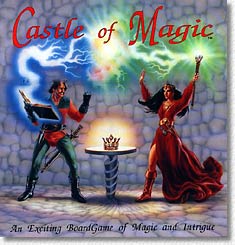
„Castle of Magic“ – Die Gegendarstellung

Aaron nannte Castle of Magic auf der Newsseite „umstritten“. Präziser wäre „von Walter gehasst, vom Rest geliebt„. Dies lehrt ein Blick auf die Bewertungsseite.

Castle of Magic hat zwei Aspekte, die einem manch anderes, ansonsten gutes Spiel verleiden. Erstens ist Kingmakerei weitgehend unmöglich – okay, zugegebenermaßen nicht völlig, aber sie spielte bislang bei keinem Spiel auch nur ansatzweise eine Rolle. Zweitens bleibt das Spiel für alle Beteiligten bis zum Schluss spannend. Wer gut vorgebaut hat, mag vielleicht mit 40-70% Chance gewinnen, doch selbst wer am schlechtesten steht, behält eine dünne Chance auf den Sieg. Bei Spielchen à la 1830 kommt es durchaus vor, dass man nach zwei, drei Stunden nur noch mitspielt, um den anderen beim Spiel zuzusehen.

Castle of Magic Expansion

Das Spielkonzept ist originell und nicht ein zigter Aufguss altbekannter Mechanismen. Trotz all seiner Komplexität und sogar trotz des Diplomatie-Elements spielt sich Castle of Magic zügig und ist (inklusive Regelerklärung) in weniger als drei Stunden machbar.

Woher also Walters Ranküne? Er glaubt, der ganze Rest der Westpark Gamers ließe sich von diesem Spiel hereinlegen (ich benutz’ mal besser mein eigenes, G-rated wording). Ich denke, dass er auch seine Spaß an Castle of Magic haben wird und sich nicht mehr hintergangen fühlt, sobald er die Taktik des Spiels verinnerlicht hat.

Bleiben wir des Beispiels wegen direkt bei seinen Skandala:

Skandalon 1: Identitäten

Für die allermeisten Charakter sieht die Eigenschaftskarte ungefähr wie folgt aus: Bei einem der drei Reiche (sagen wir A) gilt: Viele Punkte für Kontrolle, viel Schaden bei Verfluchung. Bei einem anderen (unser B) gibt es wenige bis keine Punkte (bzw. Negativpunkte) für Kontrolle oder Verfluchung, beim dritten (C) ist das Verhältnis umgekehrt (Strafe für den Besitz, Bonus für die Verfluchung).

Das Idealziel ist also, in dieser Grundform, die Kontrolle über Reich A mit Verfluchungsmöglichkeit (die man dann auf C anwendet). Nicht schlecht wäre auch das Absterben des Inhabers von C samt Verfluchung – wenn man A kontrolliert, wäre das sogar noch besser. Und selbst wenn ein „Verbündeter“ A kontrolliert, kann das immer noch zum Sieg reichen.

Walter hat Recht, dass die Ziele nicht klar kalkulierbar sind. Aber das ist ein wesentlicher Teil des Witzes des Spiels. Man versucht halt vorerst, die Gegenstände korrekt den Reichen zuzuordnen, dann den richtigen Gegenstand (den für Reich A) an sich zu bringen, schließlich Bell, Book, Candle auf’s richtige Ritual zu setzten und fertig. Leider klappt das nicht immer so einfach, denn es spielen auch noch andere Leute mit. Dementsprechend flexibel muss die Strategie sein: Nächster Punkt.

Skandalon 2: Secrets

Walter beschwert sich darüber, dass die sauer erkämpfte Information, ich wolle Sorrell nicht zerstören, wertlos sei. Mitnichten!

Sorrell ist eines der drei Länder, und zwar nach meiner obigen Kategorisierung das Land C, das Land, für dessen Verfluchung Walter Punkte kriegt. Stellen wir uns mal folgendes Endspiel vor: Angenommen, ich habe einen der drei Gegenstände (sagen wir, das Amulett) unter meiner festen Kontrolle, und Bell, Book, Candle wäre so eingestellt, dass der Besitzer des Amuletts ein beliebiges Land verfluchen darf. Dann müsste Walter mit aller Macht mir entgegenarbeiten (durch Verstellen von Bell, Book, Candle und durch hinauszögern des Rituals), denn Sorrell werde ich nicht verfluchen: Irgendetwas anderes bringt mir die Punkte, und mit 50% Chance ist es sein Marus (und zu 100%, wenn mein Gegenstand nicht Marus entspricht).

Jede Information ist Gold wert, sofern man die Mechanismen verinnerlicht hat.

Skandalon 3: Informationsaustausch

Was versüßt einem mehr die Woche, als einem Verbündeten bei Diplomacy von hinten den Todesstoß zu geben? Als einem armen Opfer bei Junta anzubieten, man würde für ihn auf all diese roten Gebäude aufpassen, während er in die Offensive gehen kann?

Unter dem Wort „Spiel“ subsumiert man sehr unterschiedliche Tätigkeiten. Dazu gehört das Büffeln über Taktiken, der blinde Zufall des Glücks (und die weit weniger blinde Abwägung stochastischer Chancen) und schließlich die Kommunikation. Es gibt Spieler, die einen dieser Bereiche gegenüber den anderen privilegieren. Walter scheint z. B. die Diplomatie nicht zu mögen. Ich bin in meinem Element, wenn ich gleich einem Basarhändler um Informationen feilschen kann. Wenn man dies, Walters Vorschlag gemäß, durch einen Austausch der Charakterkarten ersetzt, dann müsste man eigentlich gar nicht vor die Tür gehen.

Um beim Beispiel des letzten Spiels zu bleiben: Ich war zweimal in Diplomatie verwickelt. Einmal hab’ ich Aaron herauszitiert, weil der alle Königreich-Gegenstand-Beziehungen kannte, ich dagegen reihenweise Ritualausgänge in Erfahrung gebracht hatte. Ehrlich tauschten wir alle Informationen und profitierten beide gewaltig. Das klappte deswegen, weil ich gut aufgepasst hatte und wusste, dass Aaron meine Daten dringend braucht und er genau das hatte, was mir fehlt.

Später ging Moritz mit mir heraus. „Du bist doch auch Lord?!“ „Ja!“ „Und du bist doch auch Beast?!“ „Ja!“ „Und du willst doch auch, dass niemand stirbt und der Fluch aufgehoben wird“ – [Nein. Ich wollte alle sterben sehen, und der Fluch war mir egal. Aber ich antwortete tapfer:] „Ja, klar!“. Im Nu hatte ich herausgefunden, welches Land für Moritz das A-Land war. Er wusste nicht, wo sich das Ritualergebnis „Inhaber von Land A darf beliebiges anderes Land verfluchen“ verbarg. Ich gab ihm die Nummer fünf (was in Wirklichkeit mein Lieblingsergebnis war: alle sterben und Fluch über dem ganzen Land). Leider hat der ganze Anschlag nicht geklappt, weil er mir später auf die Schliche kam, woran ich aber selbst schuld war – dumm.

Wow! Es soll ein Nachteil dieses Spiels sein, dass solche diplomatischen Finten möglich sind? Walter beschwert sich, dass Leute nicht mit der ganzen Information herausrücken könnten – kann passieren, wenn man nicht genug eigenen Stoff bieten kann. Deswegen nahm ich Aaron, weil er beide vitale Interessen aneinander hatten. Walter beschwert sich, dass man belogen werden kann – das passiert, wenn man einfach nicht genug über den anderen weiß und dann den Chip ausgibt. Walter beschwert sich, dass sich Leute nicht an Vereinbarungen halten müssen. Naja, das ist dann vermutlich auch ein Nachteil von Diplomacy, und von Junta, und und und … Leute halten sich dann an Vereinbarungen, wenn sie selbst auch davon profitieren, und das ist genau der Witz von Castle of Magic, dass solche Konstellationen möglich sind. („Du willst auch nicht, dass Sorrell verflucht wird, und das geht mir genauso. Zufälligerweise weiß ich, dass Ergebnis Nr. 6 Sorrell verflucht, und ich weiß, dass du das nie angeschaut hast. Also tu was mit Bell, Book, Candle, bevor es zu spät ist.“)

Skandalon 4: Das Ritual

Für Bell, Book, Candle gibt es jeweils zwei Möglichkeiten, sodass es insgesamt zwei hoch drei, mithin acht verschiedene Ausgänge geben kann. Jeder der Spieler kann an Bell, Book, Candle zerren, sodass dies Walter insgesamt unsteuerbar und völlig chaotisch erscheint.

Auch das stimmt nicht. Wenn das Spiel in die entscheidende Phase gegangen ist, ist relativ klar, wer die drei Gegenstände am Ende haben wird. Es ist also der Zeitpunkt gekommen, wo man sich eine weitgehend stimmige Liste der Prioritäten machen kann. Also: Bei Ergebnis 3 gewinne ich sicher, bei Ergebnis 4 mit etwas Glück, bei Ergebnis 6 und 1 erlebe ich den Supergau und das war’s.

Man kuckt sich halt dann die Bell, Book, Candle–Positionen dieser Ergebnisse an und hat dann bald ein Muster – also etwa: 3 und 4 haben das offene Buch gemeinsam, also mach ich das auf alle Fälle auf. Weitere Dinge spielen da hinein. Vielleicht hat ein Spieler eine gewaltige Zahl an Punkten auf die Kerze gesammelt und hat die zuverlässig ausgeblasen mit drei oder vier Bewegungen. Na gut, dann lass ich halt das Ergebnis 3 sausen (das klappt ohnehin nicht mehr) und arbeite mit aller Energie an der Verwirklichung von 4 usw.

Das Spiel wird nur dann chaotisch-unregulierbar, wenn man die anderen Spieler aus dem Auge verliert. Wenn ich stur versuche, meine Idealkombination umzusetzen, werde ich das nach aller Voraussicht nicht schaffen, denn dies ist kaum die Idealkombination der anderen Mitspieler. Besser man sieht sich um und guckt, was machbar ist und was nicht. Da es keinem besser geht, ist es durchaus wahrscheinlich, dass die Endkombination niemandes Idealkombination ist. Wenn es aber wenigstens die zweit- oder drittbeste nach den eigenen Voraussetzungen ist, dann reicht das immer noch für den Spielgewinn (was Hans und ich beim letzten Mal erfuhren, die wir mit je 1000 Punkten gewannen – die anderen hatten in der Schlusskombination Negativpunkte).

Als Walter das Ritual auslöste, kannte er seine Folgen nicht. Kingmakerei war dies nicht: Die eingestellte Kombination ging ja nicht auf Walter zurück, sondern war die Folge des Herumzerrens der anderen, sie war, wie gesagt, für niemanden ideal. Ein kluger Spielzug war das sicher auch nicht, denn Walter wurde damit Vorletzter. Andrea war wenig glücklich damit, denn für sie war diese Kombination der Supergau und der letzte Platz. Sie wäre auch ansonsten nur mit größter Mühe an Hans und mir vorbeigekommen, sodass Walter den Spielausgang (jedenfalls auf den vorderen Plätzen) letztlich nicht verdreht hat.

Ich sagte am Anfang, dass gezieltes Kingmakern bei Castle of Magic nicht so leicht ist. Ich meinte damit, dass man kaum bestimmten Spielern etwas auswischen kann. Das sollte aber nicht heißen, dass man das Spiel durch untaktisches Verhalten nicht reichlich verdrehen und sabotieren kann.

Link zu Moritz‘ Antwort auf Walters Standpunkt.

„Castle of Magic“ und die Verarschung

Ich liebe strategische Spiele. Das muß vorweggeschickt werden. Ich liebe aber auch generell Spielen als Freizeitzeitkultur und ich genieße unseren Spielkreis „Westpark-Gamers“. Hier haben sich meine Spielambitionen schon erheblich gewandelt. Fantacy und Adventure-Games sind für mich heute nicht mehr der saure Apfel, in den ich halt auch mal beißen muß. Moritz hat für eine behutsame Umstellung der Ernährung gesorgt. Heute finde ich diese Kost manchmal sogar spannend und unterhaltend. Aber nicht immer.

Castle of Magic Nehmen wir „Caste of Magic“. Nach Moritz „funktioniert diese Mischung aus ‚Cluedo‚ und ‚Talisman‚ sehr gut“. Der Spiele-Kritiker Ray Mulford schreibt, „it is a really fun game. I’m glad to have it in my collection.“ Ich teile diese Euphorien nicht. Ganz im Gegenteil. Ich fühle mich verarscht.

Ich mag keine Spiele, bei denen es einzig und allein darauf ankommt, durch hundertfaches Ausprobieren dahinter zu kommen, welche eine Irrgarten-Szenerie sich ein Autorengehirn ausgedacht hat. Das bezog sich jetzt auf Indianer Jones. Ich mag keine Spiele, bei denen allein Fortuna’s Liebling gewinnt. Das gilt jetzt für Lotto und Roulette. Ich mag auch nicht unbedingt Spiele, bei denen sich zwei Intelligenzbestien mit gefletschten Zähnen gegenübersitzen, bis einer bei der kleinsten Unaufmerksamkeit den anderen auffrißt. Schachspieler, verzeiht mir! Ich mag Spiele, die eine Spielrunde mit einer gehörigen Portion Interaction miteinander und gegeneinander spielt, bei denen Geschick, Psychologie, Kooperation und Konfrontation meine Gewinnchancen heben, und bei denen ich zu jeder Zeit meiner Maxime nachgehen kann, „to have a plan“.

Zurück zu „Caste of Magic“. Wenn das Spiel aufgebaut ist und ich meine Spieleridentität zugeteilt bekommen habe, dann fängt erst einmal die große Ritual-Rechnerei an. Heute bin ich Seballa und würde 10000 Punkte verlieren (tödlich), wenn Marus verflucht wird, dagegen gewinne ich 2000 Punkte, wenn Sorrell verflucht wird. Bilanzieren wir also die möglichen Rituale-Ergebnisse:

Ritual-Ergebnis 1 „Fluch generell aufgehoben“, ganz klar, das ist gut, weil es einen Verlust von 8000 Punkten verhindert. Ritual-Ergebnis 2 „Der Besitzer der Krone muß eine Stadt seiner Wahl verfluchen“. Was bedeutet das für mich? Wer am Ende die Krone besitzt, könnte mir durch seine willkürliche Entscheidung, Marus oder eine andere Stadt zu verfluchen, 10000 Punkte kosten oder 2000 Punkte einbringen. Wie kann ich seine Entscheidung voraussehen? Zunächst einmal gar nicht! Am besten ist es wohl, ich bemühe mich selber darum, die Krone in meinen Besitz zu bringen. Es gibt aber insgesamt nur 3 Objekte, um die sich 6 Mitspieler bewerben. Nur jeder zweite wird am Ende überhaupt ein Objekt besitzen. Ob für mich dabei die Krone herausspringt? Da muß ich schon kämpfen. Kämpfen heißt in diesem Spiel aber ausschließlich: Eine ganze Serie von guten Würfel-Würfen hinzulegen. Hoffentlich hat ein anderer Mitspieler nicht genauso viel Interessen an der Krone. Und dabei mehr Glück beim Würfeln.

Gott-sei-Dank gibt es noch andere Techniken, das Kronenproblem zu lösen. Falls im Laufe des Spieles erkennbar wird, daß Fortuna die Krone für einen anderen vorgesehen hat, dann könnte ich versuchen, das Ritual-Ergebnis 2 zu verhindern. Immerhin ist die A-priori-Chance dafür 87,5 %, sollte also fast von alleine gehen. Zur Sicherheit muß ich nur noch herausfinden, unter welcher Kombination von Bell-Book-Candle das Ritual-Ergebnis 2 verborgen ist. Doch dazu später.

Ja selbst wenn ich die Position von Ritual-Ergebnis 2 „deduktiv“ (d.h. durch systematisches Gutes-Würfeln und durch zufälliges Aufdecken des richtigen Plättchens) erfahren habe und dieses Ergebnis als Endstand nicht verhindern kann, so könnte ich durch konsequentes Einsetzen von Secret-Abfragen noch versuchen herauszufinden, ob der Besitzer der Krone mein geliebtes Marus überhaupt verfluchen will, oder nicht doch lieber eine andere Stadt. Mit Glück und Zufall erfahre ich das vielleicht. Vielleicht auch nicht. Am Endergebnis und dessen Tragweite ändert das natürlich nichts. Ich wüßte lediglich bereits ein paar Runden vor Schluß, ob ich verlieren werde oder irgendwo im Mittelfeld landen werde. Auch dafür lohnt es sich zu kämpfen, d.h. gut zu würfeln, gell Moritz?

Ach wir sind ja erst bei Ritual-Ergebnis 2. Bei Ergebnis 3 bzw. 4 stehe ich vor dem gleichen Dilemma, nur geht es hier um Amulett und Szepter anstelle der Krone. Gleiche Überlegungen, gleiche Wahrscheinlichkeiten. Ganz schön kybernetisch.

Das Ritual-Ergebnis 5 ist jetzt kontraproduktiv zum Besitzen von Objekten. Hier stirbt der Besitzer der Krone und sein Land wird verflucht. Es geht für mich also gar nicht allein darum, die Krone zu erwerben; ich muß auch noch dafür sorgen, daß am Ende nicht das Ritual-Ergebnis 5 erzielt wird. Sterben kann ich mir nicht leisten, daß ist genauso tödlich wie der Fluch über Marus. Sollte ich besser den Besitz der Krone erst gar nicht anstreben?

Für die möglichen Besitzer von Amulett und Szepter tritt die gleiche Katastrophe bei den Ritual-Ergebnissen 6 und 7 ein. Es heißt also für alle Spieler höllisch aufpassen, welches Objekt man erwirbt (freiwillig) oder loswird (unfreiwillig), welche Interessen die Spieler mit Objekten verfolgen oder nicht und welches Ritual-Ergebnis am Ende erzielt werden kann. Nur bei Ritual-Ergebnis 8 „Fluch generell beibehalten“ sehe ich wieder Land: das kostet mich (Seballa) 8000 Punkte. Muß unbedingt vermieden werden, denn damit hätte ich die Medaillenränge verpaßt.

Was bedeutet das für meinen aktuellen Spielplan? Ritual-Ergebnis 1 ist besser als Ritual-Ergebnis 8, die übrigen 6 Resultate sind nicht kalkulierbar. Sie können gut sein oder schlecht sein, je nachdem welcher Spieler welches Objekt erworben hat und für welche Verfluchung sich der Ergebnis-Objekt-Träger entscheiden mag. Nichts genaues weiß man nicht.

Doch bis hierher ist das ganze nur ein Bruchteil meiner Seballa-Bilanz, das war nur die Spalte mit den beiden Zahlen für die Fluch-Auswirkung. Auf meiner Seballa-Karte stehen noch weitere 11 Zahlen mit Soll- und Haben-Punkten für verschiedene mögliche End-Fakten. Es läuft auf eine abzählbare Addition von endlichen Zahlen mit unbekanntem Vorzeichen und unbekannter Wahrscheinlichkeit hinaus. Ich kann sie alle nicht unter einen Hut bringen.

Hier konstatiere ich hier die Verarschung Nummer 1: „Identitäten-Bilanzierung“: In einem hundertprozentig zufallsgesteuerten Spiel investieren die Spieler gleich zu Beginn eine Menge Zeit und Rechenleistung, um die Effekte von unbekannten Besitzverhältnissen und nicht bewertbaren Ritual-Ergebnissen zu bilanzieren. Die Menge der benötigten arithmetischen und stochastischen Fähigkeiten steht in keinem Verhältnis zu dem simplem Würfel, mit dem man sich anschließend auf dem Spielbrett bewegt und der als einziges Kriterium den Spielablauf steuert.

Ich kann natürlich versuchen, klüger zu werden. Ich kann durch systematischen Einsatz des Spielmittels „Secret“ versuchen, die Identitäten, Eigenschaften und Vorlieben meiner Mitspieler aufzudecken. Lieber Gott, gibt mir eine Fünf, damit ich auf das Spielfeld Secret komme und irgendeines von Peters Geheimnisse abfragen kann.

Gott muß mir keine Fünf schenken. Jedes andere Würfelergebnis hat natürlich auch seine Bedeutung. In diesem Spiel darf man grundsätzlich nichts erbetteln. Demütig hinnehmen, was uns geschenkt wird. Wie im richtigen Leben. Irgendein Würfelergebnis wird uns immer geschenkt und jeder Wurf ist zu irgendetwas gut. Der Mensch denkt.

Ich habe die Fünf bekommen, und darf von Peter ein Geheimnis lüften. Ich mische den Kartenstoß mit den Geheimnissen und überreiche es Peter. Er gibt mir die erste auf ihn zutreffende Karten zurück. Ich erfahre, daß Peter kein Interesse hat, Sorrell zu verfluchen. Was weiß ich jetzt von ihm? Nichts darüber, ob er mein geliebtes Marus zerstören will und mir damit einen Platz auf dem Siegertreppchen verwehrt. Nichts darüber, ob er ein Serf ist, dessen Städte-Besitz mir Pluspunkte einbringt. Nicht ob und auf welche Stadt er ein Auge geworfen hat, nicht ob er sterben oder überleben will. Nur ob er gut ist oder schlecht, das weiß ich. Aber das wußte ich bereits vor dem Spiel.

Es ist ja noch schlimmer. Falls ich wieder mal einen Super-Wurf habe und nochmals die Gelegenheit habe, von Peter ein Geheimnis abzuringen. Dann darf ich wieder die Geheimniskarten mischen und Peter muß mir wieder ein Geheimnis offenbaren. Wenn’s der Zufall will, dann zieht Peter wieder die gleiche Geheimniskarte und ich erfahre zum zweiten Male, daß er Sorrell nicht verfluchen will. So geheimnisvoll ist Peter schließlich doch nicht.

Verarschung Nummer 2: „Secrets“ Es kann doch nicht sein, daß ich nach einer Reihe von mühevollen Zufallswürfen endlich auf einem Secret-Feld lande, wo ich von einem meiner 5 Mitspieler ein hochbrisantes Geheimnis erfahren darf, und er mir dann zufallsgesteuert eine Information rüberschiebt, die mich bestenfalls nicht dümmer macht, als ich ohnehin schon bin. Much ado about nothing.

Eine absolut notwendige Verbesserung wäre hier in meinen Augen, daß ich bei Secrets eine beliebige Geheimniskarte heraussuchen kann und damit einen Mitspieler fragen darf, ob die darauf beschriebene Eigenschaft auf ihn zutrifft oder nicht.

Das Spiel hat auch ein paar logisch konstruierte und durchschaubare Mechanismen. Wenn ich per Zufallswurf auf einem Feld lande, wo schon jemand ist, dann kann ich versuchen, von ihm einen beliebigen Objektpunkt abzuknöpfen. Ich muß nur im anschließenden Kampf-Würfeln besser würfeln als er. Die A-priori-Wahrscheinlichkeit dafür ist 42 %. Immerhin bekomme ich nichts abgezogen, wenn ich schlechter würfele als mein Gegenüber. Meine Sieg-Chancen kann ich sogar noch erhöhen, wenn ich im Laufe des Spieles gezielt beim Objekt der Begierde meinen Spell-Level angehoben habe. An diesem Konstrukt kann ich nichts aussetzen.

Leider hat hier Hans zu meiner Verarschung (außer Konkurrenz) beigetragen. Er war – wie der Zufall es wollte – das erste Opfer meines ersten Raubzuges. Er jammerte ganz furchtbar und lamentierte, wie unüberlegt es doch von mir wäre, gerade ihm, meinen durch die Spielblutsverwandtschaft (human – Lord) doch potentiell engsten Verbündeten, einen Krone-Punkt abzuknöpfen. Mir brach es schon fast das Herz. Am Ende stellt es sich heraus, daß er von seiner Spieleridentität her doch gar kein Interesse an irgendwelchen Objekten besaß, und daß nicht einmal die menschliche Verwandtschaft uns verbunden hatte: Er hätte davon profitiert, daß wir alle sterben. „But Hans is an honourable man.“ Dafür gebe ich meinem Kopf. Ich habe mich nach dem Spiel noch einmal explizit von seiner Redlichkeit überzeugt.

Ganz so redlich ist Peter nicht. Das Spiel erlaubt jedem Spieler, einmal zu einem beliebigen Zeitpunkt, einen anderen Mitspieler ins Chambre Séparé zu bitten, um mit ihm beliebige bis dahin gesammelte Informationen auszutauschen. Über Ritual-Positionen, über Identitäten und Geheimnisse, über Gewinnpunkte und gemeinsame Zielstrategien. Jeder darf es nur genau einmal.

Das ist im ganzen Spiel ein Abwägen und Lavieren um die Informationen, die man sich selber erwirbt und die man gegebenenfalls von einem anderen Spieler zu erfahren gedenkt. Es gilt den Spieler herauszufinden, dessen Wissen die (bekannte) geringste Redundanz mit meinem Wissen aufweist, und der in seinen Spielzielen die (vermutlich) größte Kongruenz mit meinen aufweist, so daß wir Absprachen über Zugprioritäten treffen können. Je früher ich diesen Informationsaustausch nutze, desto weniger Informationen sind es, die ausgetauscht werden können; desto effizienter sind aber mögliche Strategie-Absprachen. Und umgekehrt. Richtig ausgewogen.

Erst arbeitet jeder konsequent und konzentriert auf den Punkt hin, wo er seine einmaligen Gelegenheit des Gedankenaustausches mit einen Spieler seiner Wahl in die Wirklichkeit umsetzen will, dann kann nach der Spielregel folgendes passieren:

  1. Der auserwählte Mitspieler will nicht und schlägt die Verabredung einfach aus. Spielzug weg – Information nicht da. Da hätte ich mir wohl einen anderen Mitspieler aussuchen müssen!
  2. Der auserwählte Mitspieler verrät mir nur die Hälfte dessen, was mich so brennend interessiert. Vielleicht sogar erst, nachdem ich meinerseits mein gesamtes eigenes Wissen offenbart habe. Das war dann zwar undiplomatisch von mir, mindert aber nicht den Verlust.
  3. Der auserwählte Mitspieler belügt mich nach Strich und Faden. Niemand kann vom anderen verlangen, daß er den Wahrheitsbeweis für seine Information mitliefert. Es ist alles Vertrauenssache. Bei unserem Spiel hat hier Peter den Moritz betrogen. Dumm gelaufen. Über Peter’s Redlichkeit läßt sich halt nicht streiten.
  4. Der auserwählte Mitspieler hält sich im späteren Verlauf nicht an die ausgemachte gemeinsame Strategie. Aber das ist ja schon normal.

Diese Effekte werte ich von der Spielregeln her als eine ganze Reihe von Schwächen, die ich insgesamt zusammenfassen möchte zur Verarschung Nummer 3 : „Informationsaustausch“ : Es kann doch nicht sein, daß ich mich hier im Schweiße meines Angesichtes um etwas Transparenz bemühe und dann – abhängig von den gegenläufigen Ambitionen meines Mitspielers – als begossener Pudel nach Hause geschickt werde.

Als Mindest-Ergebnis dieses Spielzuges erwarte ich, daß mir der auserwählte Mitspieler seine Identitätskarte aushändigen muß. Selbst die Herausgabe des Wissens um die Ritual-Positionen sollte noch Pflicht werden. Damit könnte man die Endphase des Spiels beschleunigen und die Zufallsergebnisse beim Spielausgang etwas mildern.

Ja der Spielausgang. Am Ritual hänget, zum Ritual dränget doch alles, ach wir Armen! Haben wir hier genügend Positionen aufgedeckt und alles in Erfahrung gebracht, was uns zuträglich ist? Hoffentlich. Wir brauchen auf jeden Fall Gewißheit über die Ritual-Positionen, deren Ergebnis für uns tödlich ist. Wieviel Zufall braucht der Mensch dazu? Angenommen, ich habe meinen Ritual-Level auf 3 hochwürfelt. Dann wäre jedes zweite Würfeln, ein Ritual aufzudecken, erfolgreich. Bei 8 Ritualen wäre die Wahrscheinlichkeit, mit 8 Würfen alles erledigt zu haben, etwa 4 Promille. Bei 9 Würfen ist sie schon über 1 Prozent. Und so geht das weiter. In einer endlichen Zeit sollte doch irgendwann jeder alles wissen. Denkste! Rein rechnerisch kann es sein, daß einer unendlich lange würfelt, ohne alle Rituale gelüftet zu haben.

Dabei laufen die realen Erfolgsquoten für die einzelnen Spieler immer weiter auseinander. Das „Gesetz der großen Zahl“ besagt nämlich nicht, daß bei einer Kette von Zufallsereignissen die Ergebnisse aller Mitspieler immer enger beieinander liegen werden. Im Gegenteil, es gesagt, daß die absoluten Differenzen immer größer werden. Konkret bedeutet das für unser Spiel, daß zufallsbedingt die Menge des Ritual-Wissen der einzelne Spieler immer stärker auseinanderklafft. Während die einen schon alles erwürfelt haben und sich auf die Endposition einschießen, krebsen die anderen noch mit einem Bruchteil des benötigten Wissens herum und werden von jedem weiteren Wurf frustriert. Nein, das ist keine Verarschung, das ist nur purer Zufall. Aber vielleicht versteht jetzt einer von Euch, warum ich für dieses Spielprinzip nur 3 Wertungspunkte vergebe.

Als ich mit meinem letzten Zug willentlich aber den Regeln gerecht das Spielende herbeigeführt hatte, kannte ich 6 Rituale und hatte mich auch schon vergeblich um vollständige Aufklärung beim 7 (und logisch letzten) Ritual bemüht. Alle kritischen Rituale waren bereits in meinem Repertoire und die Ritual-Position stand auf einem akzeptablen Feld. Hinterher hat sich Andrea über mich beklagt, weil ich auch ohne Vollwissen das Spiel beendet hatte. Das, liebe Andrea, grenzt schon an Verarschung (außer Konkurrenz).

Natürlich war es enttäuschend für Dich, von dem einzigen möglichen Ereignis, das für Dich tödlich war, getroffen zu werden. Glaubst Du, das war ein unverdientes Pech? Die Summe des Pechs ist konstant. Irgendeinen hätte es immer treffen müssen. Ohne daß er dafür kann. Allein deshalb, weil die Mehrheit der anderen zufällig dieses End-Ergebnis eingestellt haben. Diesmal warst es halt du. Mehr liegt in diesem Spiel nicht drin.

Du bestreitest hier den Zufall? Wenn Du niemals genau weißt, in welche Richtung die anderen ziehen wollen, wenn jeder nur äußerst begrenzte Möglichkeiten hat, die Erfolgswahrscheinlichkeiten für seine Aktionen zu erhöhen, wenn die günstigen und ungünstigen Felder nicht wie in einer lieblichen Landschaft weich ineinander übergehen, sondern wie bei schroffen Felsen und Schluchten unmittelbar nebeneinander liegen, wenn es vom Würfel abhängt, ob einer überhaupt ein ritual-relevantes Objektfeld betritt und wenn dann weiterhin der Würfel entscheidet, ob einer den Objektlevel auch tatsächlich verschieben darf oder nicht, dann ist das End-Ergebnis genausowenig beeinflußbar wie eine Kugel im Gauss’schen Nagelbrett. Wenn mir hier seine Illusionen als Strategie verkaufen will, der möchte mich doch wohl auf den Arm nehmen. Ich verzichte auf die Formulierung des Verarschungsaxioms Nummer 4.

Wie wird überhaupt die Ritual-Position bestimmt? Ich brauche es den Lesern, die bis hierher gefolgt sind, nicht zu erklären. Es ist ein spannender Kampf aller gegen alle und – in meinen Augen – das bemerkenswerteste Element des Spieles. Moritz hat vollkommen recht, wenn er es hier als „spannend, unterhaltsam und aufregend“ empfindet. Aber das gilt nur für diese Phase. Und ob eine solche Phase überhaupt stattfindet (und nicht zwei Spieler den Reibach bereits unter sich verteilen, während die anderen vier noch im Halbdunkel herumwürfeln), ist zufallsabhängig und keineswegs garantiert. Für diesen komplexen und langwierigen Spielaufbau viel zu unsicher.

Zum Vergleich möchte ich hier Barrikade / Malefiz entgegenhalten. Dort ist der Endkampf um das Ziel zwischen den zufällig oder gewollt entstandenen Seilschaften und deren internes Machtgerangel vergleichbar spannend, aber spielimmanent, logisch entwickelt und langdauernd. Mit vielen zusätzlichen Einflußmöglichkeiten und Überraschungseffekten. Und nicht mit so viel überflüssigem Hokuspokus. Doch ich will nicht abschweifen.

Bei „Castle of Magic“ tritt das Spielende ein, wenn insgesamt 5 mal ein bestimmtes Spielfeld betreten wird. Vom gleichen oder von verschiedenen Spielern. Vor mir waren Aaron und Hans bereits 4 mal auf dem bewußten Feld. Ich war der fünfte und habe somit den Sudden Death ausgelöst. Nicht gerade emotionsgeladen und euphorisch, aber die Ritual-Position schien erfolgversprechend zu sein. Mindestens drei Augenpaare richten sich schweigend und vorwurfsvoll auf mich. Wie bei Roald Dahls „Küsschen, Küsschen“ das Auge der präparierten Gehirnmasse auf die rauchende Ex-Ehefrau. „Hat er uns jetzt bösartig den Spaß verdorben?“ Diese Situation, liebe Freunde, ist auch eine Art Verarschung. I rest my case.

Peters Antwort auf diese Darstellung

Moritz‘ Antwort auf diese Darstellung

GI-Interview with Wolfgang Kramer

(This article was originally published in „Games International“, issue #13 and is reproduced here with the permission of Brian Walker, the former GI editor)

THE GI INTERVIEW

Wolfgang Kramer

There can be few more commercially successful games designers in the world today than Wolfgang Kramer. His Auf Achse alone has sold over half a million to date, while others such as Nikki Lauder’s Formel Eins, and Wildlife Adventure remain firm favourites with games players of all ages and preferences. Wolfgang took time out at the recent Essen Games to discuss how he puts it all together.

When did you first become interested in games?

It started when I was a child. My grandma used to play with me; she always used to let me win, so I developed quite a positive feeling about games. When I reached my teens I started buying all the games I could find, though this was in the fifties so there wasn’t really much around, just variations of Monopoly and Scrabble. I then started to change some of the games I bought. My friends preferred the ’new‘ versions and suggested I make some games of my own. At that time I didn’t think I was able to, though the idea stayed with me. A few years later I started to study commercial science. In my free time I started to develop ideas for my first game. I’ve always liked race games, but I didn’t want one where you just roll the die and move, so I had to develop a new movement system. I wrote down about twenty possibilities.

Was this how Tempo was born?

Yes, but not straight away, though Tempo was my first published game, in 1974 I think. Tempo was an abstract game using a card based movement system. It took me about a year to refine it to the state where it could be published.

A few years later I modified it and it became Formel Eins. The motor racing theme is not so important. The system is adaptable to virtually any form of racing.

I remember you telling me once that your design approach is system first, theme later.

Yes, that’s mostly true, though in the case of Wildlife Adventure the theme came first.

What about Auf Achse?

Again the theme came first, because this was a promotional game originally, which was specially commissioned by a road haulage company.

What is your favourite out of all the games you have designed?

I like Around The World in Eighty Days a lot, and Formel Eins. Although it has sold very well, Auf Achse is not really one of my favourites, likewise Undercover (Heimlich & Co) though they are my games so I stand behind them (laughs).

What have you got coming out next year (’90)?

One of my old games, Coup, is being published by F X Schmid this year with a new theme: it will be called Holiday. There will be a card game from Ravensburger, which I co-authored, called Cash, and also Terra Indium, an abstract game which I did for Kosmos.

The press verdict on this year’s (’89) releases was not good. The feeling was that the games were getting too simple.

Yes, I understand what you mean. Ravensburger, MB, Parker, they all want simple games. I think Ravensburger are changing, though. They want to do one or two games with a higher level which will not be so commercial.

Do you play other people’s games?

Oh yes. I like Sid Sackson’s games very much, and Alex Randolph’s. When I’m not playing or working on my own games, I teach games.

How’s that?

There is a school in my town which, like most schools, teaches lots of subjects. I am the games teacher for four evenings a year, anyway.

Do you mean teaching people to design games?

No, how to play games.

What sort of games do you use as an example?

Quite a variety, really. Hol’s Der GeierCafe InternationalPlaybossHare and Tortoise.

What kind of age group do you teach?

Just adults. I’m also in a local games clubs where we play all the new games.

You seem very thorough and professional in your approach.

Yes, it’s very important for me to see what is happening in the market, and also how the public react. I come here to Essen, I go to the Nürnberg Fair. I must know what companies are publishing, and also what the trend for the future is. Also I like to try and understand why certain games get published and others don’t. I visit shops and talk to the people who sell games. In the bigger shops I organise promotional visits. I explain my own games to the customers. Some shops have special ‚games days‘ where they have special teachers to explain the games to the public. Like with my visits, there is no money involved but they are valuable promotional exercises.

There seems to be a strong games culture in Germany.

Yes, but only in the last three or four years. In the seventies there was really nothing.

How important was Essen in this evolution?

There were several factors. The ‚Game of the Year‘ was an important step. Also, people have more spare time now. TV too has produced a big counter reaction. Watching television is now considered very passive. With games, people come together and interact. The press picked up on this and now devote quite a lot of space to writing about games.

What are your favourite games, apart from your own?

I like to play AcquireHare and TortoiseFocusSharkAmazing Labyrinth, chess too. I played 1830 just recently – quite complex but very, very good. I play all sorts of games.

And long may you continue to do so.

Wolfgang Kramer was talking to Brian Walker.

Birth of A Dynasty

DESIGNER’S NOTES

Birth of a dynasty

Derek Carver explains the design of his game of competing dynasties, published by Games Workshop as Blood Royale.

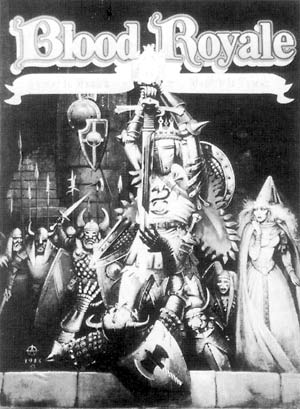
Blood Royale box

Ideas for new games present themselves in a variety of ways. Sometimes, though rarely, as complete games, sometimes as a system devised, perhaps, with playing cards or counters, around which a theme is subsequently developed, and sometimes as a scenario which has the potential of being made the subject of a good game.

If Blood Royal (in common with many people, I prefer to drop that final mysterious ‚E‘) came into any of the categories it was the third one.

In my earlier game – Warrior Knights -I was enthusiastic about the idea of games during the course of which the players ‚assembled‘ and used their skills to vote on issues which would greatly affect subsequent play. Although such an idea had great appeal for me it wasn’t sufficient for a game in itself and a much wider game had to be developed around this core concept. Much the same thing happened in Blood Royal.

Unlike many gamers, I would not call myself a history buff, but I do enjoy reading history, and I had also been an avid watcher of the TV series The Plantagenets, having visited many of the locations as a result of my fascination with this period. The history of the Middle Ages illustrates that not everything was achieved purely by conquest (although military might was a great bargaining factor in one’s favour). Prolonged campaigning was not easy. There was considerable diplomacy, often sealed by a marriage contract. Here, I felt, was the substance for a game. I wanted to make a game where each player was a monarch who would produce children, marry them off to the family’s advantage, secure trade routes and wage war. Each player was Henry II, if you like.

SURVIVAL CHANCES

From the start I decided the only realistic way forward would be to include an element of role-playing in the game. I therefore gave each ‚character‘ a character sheet in the true role-playing tradition. The die-rolls recorded on this sheet determined 1) how healthy the character was, 2) how strong in battle or diplomatic cunning, and 3) how attractive to the populace. The first was an indication of survival chances – especially important to the women who, it was hoped, would produce a number of children, hopefully some strong males. The second is self explanatory, women being able to confer their qualities on their husbands. The third quality reflected the character’s general popularity. A popular king could roam Europe with less fear of rebellion breaking out at home and an attractive princess was always to be hope for.

This all meant that the characters in the game also had to die from time to time so instead of being only Henry n, the English player, for example, would have to represent the more abstract concept of the entire dynasty, and this gave the game its original name – Dynasties. Thus, the game differed from normal role-playing in that instead of players being their character they would in this game control many characters, all different.

Each player starts the game with a king, a queen, and two children, all of specified age. Dice rolls are made to determine the sex of each child and rolls are also made to determine the three characteristics of each member of the family. Each is given a character sheet recording year of birth and so on, and the players also have to choose their dynastic name and names for each of the characters. This meant that from the start the game was peopled by seemingly real and quite different characters (‚different‘ because of their individual qualities). The only unreal thing about it is that at the start each player controls families all of the same age, but this situation doesn’t last for long.

FEWER CHILDREN

Play is in five year segments, starting with 1300. A survival die roll has to be made for each character every five years. Their survival chances vary, of course, according to age, childbirth, and fitness (the original die roll 1) mentioned above).

One of the many changes that took place during the early days was the reduction in the number of small children that were around. Originally more children were born, but quite a few died before they reached the age of 15, which is the age they are of any interest to us in terms of the game. So in order not to make die rolls and fill out character sheets for children that didn’t survive to 15 the system was adjusted. Fewer children were born, but those that were born were guaranteed to survive to 15. We ended up with the same number of young adults but saved a lot of time and paper in the process.

So this was the core idea. The early problem was what to do with the idea. We couldn’t sit around the entire evening manipulating these royal families; we had to do something with them.

The first problem was that history did not have a four to six player game in mind, each with more or less equal chances. While England hasn’t changed much geographically speaking, the rest of Europe has, and there was no Germany and no Italy as such. Unlike Warrior Knights where I felt the correct answer was to create a fictitious country, with Blood Royal I knew I could only maintain the historical ‚feel‘ I was aiming for if I set my game firmly in medieval Europe, so I had to create Kingdoms of Germany and Italy, and also give each country in the game the same number of provinces. This doesn’t seem to have bothered people as much as I thought it would (although I don’t know what German and Italian players think about it!). But even with my cavalier attitude to history and geography there was no way in which I could easily bring in a sixth power, so I restricted the game to a maximum of five.

So – I had already departed from history, but the general feeling in the game was all right.

THRASH AND BASH

What next? I didn’t want it to be a thrash and bash wargame. I decided I wanted it to be centred on the securing of trade and trade routes plus income from taxes. The latter was pretty simple – I allowed players to collect taxes from each province they owned with the option of double taxing. The latter increased the chances of the highly taxed provinces going into rebellion – a calculated risk, in other words, which is a concept that always appeals to me and about which more anon.

For the trading I hit upon an idea which I must confess to being rather pleased with and which could, in itself, have been the core idea for another game. Wanting it kept simple, I devised a system of three basic commodities (what they are called is unimportant – let’s call them A B and C). Each country had to acquire these commodities and transport them to their capital to be ‚cashed in‘. But they could cash them in only in sets of three (ABC). In the full five player game there are only three of each type around the board, which means there are not enough for each player to have a set each time. Also no single country produces one of each (they might produce two As and a C, for example). This means that in order to secure the missing item(s) players had either to trade, secure them by contract (about which more later), or capture the province in which a desired ‚missing‘ item is produced.

Additionally there are around the board two somewhat more luxurious commodities – two Ds and one E. If, instead of trading in a set of just ABC, you can acquire ABC and D you get much more for them, and if to this you add the true luxury item E you get considerably more. On their own the Ds and the E are worth nothing; they have to supplement the basic set. These commodities are placed on the board in their producing province at the beginning of each five year period unless there is a specific occurrence that prevents this.

ROYAL FAMILY

This trading aspect of the game hasn’t changed since the early days. It worked well and provided the framework I needed. We now had a royal family that had to ensure its own continuation and it needed to obtain commodities. It also needed income. If it had some strong royal males plus a strong army it could go out and capture the producing provinces by force. In the same way it could wage combat in order to secure its trade routes. If necessary a country could build a string of castles. A castle means it doesn’t matter what happens to the province in which it is located: goods can still be transported through that otherwise enemy province, the castle ensuring safe passage for troops and trade goods. But warfare was an uncertain business. Kings especially could not normally safely leave their capital to indulge in prolonged foreign wars. If they were generally popular and were doing well it was easier but if they were not too high in the popularity stakes and also weren’t being too successful in their campaigning there was always the possibility of domestic unrest looming over them. And if they don’t at once rush back to quell it rebellion had a nasty habit of spreading.

So securing what they want by other means became important and here another major aspect of the game comes into play – the royal marriage. For each player it is essential to ensure the continuation of his dynasty. If he doesn’t do so control could go to another player who can trace his monarch’s ancestry back.

Also an unmarried king cannot produce princes to lead his armies. So wives are in demand – especially beautiful and healthy ones. (Even so, there are a lot of desperate marriages between pretty nasty boys and somewhat sickly girls, I might add!) Most marriages also seal a ‚Marriage Contract‘ and if, for example, you are seeking a girl to marry the King’s eldest son you can put your demands pretty high, because the player controlling the potential future queen’s family stands to gain quite a bit financially when she ascends the throne. These all-important contracts can concern non-aggression, military support, money, trade rights, trade routes, land, or a mixture of the lot. They have to be carefully worded because their terms become binding for as long as both parties to the marriage survive. Players are not allowed to break the terms of a marriage contract: they would have to arrange the death of one of the parties first.

QUILL TO PARCHMENT

So crucial is the clever negotiation of these contracts that they presented one of the early problems in the game. A new player could be totally at the mercy of an old hand who easily tied him up into a contract that he subsequently came to realise he could well have done without. (France is always best played by such a persuasive player.) This is why a change was made so that at the start of the game the children are too young to be married at once. This at least gives an inexperienced player time to see what it’s all about before he puts quill to parchment.

One of the features of the game is that during each five year turn each player has to announce to the rest of the players what has happened to his dynasty – who has died, who has been born and the description of a child, and so on. The death of a king or queen is, of course, a major event and the records are searched to establish the next in line in those rare cases where it is not immediately obvious. It is even possible for a player’s kingdom to pass to another player who has the only direct heir, but this is rare. Legitimate claimants to the throne can be passed over, but from then on they provide a nuisance factor in the game that other players can exploit.

There were a few other aspects that were slowly modified during the early days (or years) but that was the game in essence.

As it stood it presented one important problem as I saw it, although it wasn’t one that seemed to worry many of the groups that came to know it and made copies. To obtain the full feeling of this continuing and developing dynasty it was essentially an ongoing game. During the course of a three hour game the most one could expect is that the king or queen (or both) might die and the next in line ascend the throne but it wouldn’t go much farther than that. The true essence of the game, though, was the continuation of the family and its ramifications as it married into other dynasties and produced children. This meant that it either had to be played for a long time or it was best played as an ongoing game by the same group (the winner each session being the player who had best improved on his starting position). This is the way it was often played. Chronicles were kept and huge family trees maintained. It has been turned into a play by mail game in Austria and there they publish the appropriate dynastic announcements with proper obituaries on the death of an important Royal Personage. This is what the whole thing is about.

HISTORICAL EVENTS

Blood Royale

So this was how the game stood when Games Workshop came on the scene. They had recently done an excellent job with my Warrior Knights and I was happy to let them have Dynasties as it was then called. They knew the game and were attracted to the idea of incorporating role-playing features into a traditional boardgame.

The first thing they decided to change was the name. They were rather frightened to use Dynasties because of the popular TV series. At the first meeting I tossed in Blood Royal as an alternative title, which was finally adopted but with an additional ‚E‘. I have noticed that continental players, obviously disliking the mixture of languages, refuse to acknowledge this final E.

Unfortunately we then started to run into a bit of trouble and our good relations took a temporary downturn. Warrior Knights had been published precisely as I invented it. Well, that is not 100% correct – a few changes were made to assist production but not only were they all made by me or with my approval, but I also felt they were improvements. The GW developer for Warrior Knights was Albie Fiore, who had also worked on my Dr Who (one of GW’s first boardgames) and he subsequently worked on my Whirlwind (FASA). By this time he had left Games Workshop and the in house developer of Blood Royal was somebody different, and he wanted to expand the game and introduce more historical events. Although my contract allowed me to veto any changes to the original I had respect for the enthusiasm and undoubted abilities of the developer, even though I feared the additions would lengthen an already long game. But the big problem was that in the main the proposed additions (and they were all ‚additions‘ as opposed to changes) were not the sort of rules I would have invented. Not that they were bad in themselves, they simply reflected the sort of game the developer would have invented and not the sort of game I like.

Let me give an example to illustrate the different approaches. Games Workshop wanted to introduce a series of historical events in the form of chance cards. These were to be events that often affected (usually adversely) one player. Of course, they were not as crude as ‚Go to Jail‘, but you know what I mean. They also mirrored historical events. While I was not totally against the idea of these events I wanted them to have considerably more interest and add to the fun of the game. I also wanted them to be different from the sort of thing people are used to. My feelings are that historical events happen because a certain regime either takes a certain action (one out of a number of possibilities) at a certain time, or decides to take no action at all. If at a particular moment a contrary decision had been made the course of history would have been changed in some way. What we see as history, therefore, is the result of one decision out of a number of possible decisions taken at the time and in my game we were living in the time.

INTELLIGENCE REPORT

So, to get back to the game, I suggested that firstly, we should try to restrict events so that they affect all players, and secondly, that the event should be in the form of an intelligence report listing what could happen in, say, two to three turns: i) if no action was taken, ii) the chances of averting this occurrence if more money was directed into the area (money that might be in short supply), iii) the chances of suppressing the event by stationing troops in the area, and so on. The ‚chances‘ would be expressed in terms of die roll odds.

After all, these are the sort of questions a ruler would have to ask at the time and he would decide on the action to take in the light of the replies, the odds of success, and the effect on his exchequer, stability, and so on. So in game terms it would mean that the player would do what he thought most expedient and possible and he would have to await the outcome. At the same time other players who have no love for him (and no contract preventing intervention) could, possibly, lessen his chances of success by taking certain actions themselves. The developer saw my point but sadly our minds didn’t run along the same lines. Certain modifications were made, but generally speaking I thought the event cards at the end of the day didn’t really reflect the original thinking I was aiming for. I preferred to offer the game as I invented it and leave it to enthusiasts to extend it as they wished as a result of play and the preferences of their own group.

As it was clear that we were thinking quite differently and time was being consumed it was finally agreed to publish the game in my basic form with the new rules being included as ‚Optionals‘ to be used or discarded by the purchaser as he or she wished. In this way I was able to give Game Workshop carte blanche with these additions, without further reference back to me. It is pertinent to add at this stage that it is rare for publishers to agree to allow an inventor to veto any changes. He normally has no control whatsoever over the product that finally arrives on the shelves, which might be quite unlike his original. An amazing situation when you come to think about it.

FOREIGN PRINCES

The solution reached was quite satisfactory. As far as the production was concerned they made a truly superb job of it. I must admit that I took exception to the box cover, which didn’t reflect the feel of the game at all, and it was rather sad that GW scored an own goal by deciding to suggest names for foreign princes and princesses – presumably for the benefit of players whose knowledge was limited in this regard- and getting them wrong! But these are peripherals. No inventor could be anything but delighted with the quality of the product offered, right down to such often overlooked details as the magnificent presentation of the rules, which excellently carried through the historical feel of the game. These are the qualities that show Games Workshop at their best, and they deserve every compliment.

In its basic form Blood Royal presents a system that is ideal for building on and I know a number of groups have developed additional rules bringing in the power of the Church, rules that have qualities that appeal to their particular group and have stood the test of playing over a period, being slowly refined in the process. This is excellent and what I hoped would happen.

While one must be pleased in one respect, it is also a pity that Blood Royal appeared just before GW made the decision to turn exclusively to the fantasy games with which they are normally associated and which (as a result of their White Dwarf readership) had been far more profitable for them than their ventures into non-fantasy and comic strip themes. Having made this decision it reflects greatly to their credit that they pushed ahead with Blood Royal in the quality that they did, it being no small investment.

(This article was originally published in „Games International“, issue #13 and is reproduced here with the permission of Brian Walker, the former GI editor)

KREMLIN

KREMLIN

Urs HostettlerThe object of Kremlin (reviewed last issue), is to manipulate mythical politicians in the Soviet Politburo with the aim of becoming Party Chief and waving at the October Parade in Red Square. In its first life Kremlin was designed by Urs Hostettler (pictured above) and published by his company Fata Morgana, in Berne, Switzerland. In this short feature, Urs describes how he got the idea for the game, and his opinion of the newly released Avalon Hill version.

How does one go about designing a game like Kremlin? It’s a question I’ve been asked on more then one occasion.

Well, it all started one night in March 1985, as I was watching TV at home in Berne. Tschernenko had just waved the long goodbye a few days earlier, and already the silver screen was awash with speculating specialists attempting to predict his successor.

Old man Gromyko was Foreign Minister at the time, and as such, was able to nominate the new Party Chief. The hot money was on Marshal Ustinov who was just approaching the peak of his career at 80. In the background were two young turks, Gorbachev from Moscow, and Romanov from Leningrad. Both were in their late fifties and thus had a lot to lose should their bid for power fail (you don’t get a second chance).

As I was listening I played around with some cards and decided to create my own Politburo, and work out a mechanism that would respect the principles of gerontocracy (the rule of the old), but allow a hidden strategy whereby younger members also stood a chance of gaining power.

I worked on the game system for Kremlin for about one year. Both Sigma File (Gibson’s), and Down With the King (Avalon Hill) were strong influences in terms of game mechanics. At one point we thought of changing the setting to the Vatican, with the Pope taking the place of Party Chief, and visiting foreign countries instead of waving. But then the situation in Moscow changed so dramatically that we wondered if some evil Russian game developer had stolen our ideas; Ustinov died, Romanov was demoted to candidate status, and Gromyko got the heave from the foreign ministry. Thus, Kremlin was born.

One of our objectives when designing Kremlin was to produce a simulation of Soviet political culture, which is why we place so much emphasis on controlling characters in secret. Thus a player who has been playing very aggressively and dominating the game, can find himself rudely upstaged at the climax when he discovers that the character he thought he was controlling and who has been waving like a Queen, was really controlled by somebody else!

So in this sense it can be seen that our version is much more of a psychological game than the Avalon Hill one; a player can win by simply doing nothing the entire game.

This is not a criticism of the AH version which I know went through a lot of rigorous playtesting. My main qualms were about re-situating the game in the eighties. Originally the game was set in the fifties – the grey era of Soviet politics. My intention was to satirize this period. I don’t really think many aspects of the game apply to what Gorby is currently trying to achieve, though this is something of a political point and does not affect play in any way.

As to the game itself, I am inclined to think that their version is more suitable for the American market with its emphasis on action. It can be quite boring to sit around for two hours doing nothing, except revealing victory at the conclusion. But being perverse by nature, how I like to win this way!

But what of the American version? Better? Worse? or merely different? Our editor, who was partially responsible for AH’s decision to take the game, describes the Kremlin campaign.

My brief from Avalon Hill was simply to write the character cards for their version. However, their head of development Don Greenwood knew I’d played the game several times in its original form, so sought my advice on some of his proposed rule changes. When I read the first draft for these changes my heart sank. My American colleague Alan R Moon had already seen the changes and had inevitably chimed in with his two-penn’orth. Even so, I wasn’t prepared for the changes that Don had wrought. Rightly or wrongly, Avalon Hill had acquired a reputation for making games more complex, merely for the sake of it. At first glance, Don’s changes seemed to confirm this view. How wrong can a comrade be? My initial reaction was along the lines of ‚why change a winning team?‘ After all, the game had sold very well in Europe, even with minimal production standards and limited distribution. Some of the changes seemed petty, like changing the ‚Kremlin Wall‘ (under which Soviet heroes are buried) to the ‚Graveyard‘. To his credit Don later admitted that this was ‚dumb‘ and reinstated the unique Soviet structure.

Kremlin cardLike many who had played the original game I was disappointed to see Anatol Fuckoff and Andrei Pissin purged, but this was expected so no resistance was offered. Don also asked me to come up with some alternative names for the characters as it was felt that the Teutonic humour of the originals would be lost on the English speaking market. I demurred; apart from having a sentimental attachment to Tigran Zenjarplan et al, I felt that they added atmosphere to what was already a ‚foreign‘ game. Attempting to change the names into jokey English ones seemed unnecessary, though I did agree to come up with two to replace Anatol and Andrei. As I didn’t hear from Don again on this point I assumed that the originals were to be retained. It wasn’t until I saw the finished product that I was aware the names had been changed. My own afterthought contributions had missed the deadline anyway, but who knows, perhaps Betty Boobsky might turn up in a future edition?

As to the rule changes, my main concern was the removing of the hidden influence points and being able to win with three different wavers. I felt the effect of this would be to produce a more muddled game, lacking the clarity and the psychological elements of the original. The crux of the argument was that I felt Kremlin was essentially a fun game, while Don seemed to be trying to turn it into an altogether more strategic affair via increased rules.

Then there were the political problems inherent in re-situating the game in the eighties and sticking Gorbachev on the cover. Urs and I were adamant that the game was meant to reflect the Cold War period under Stalin, and was in no way representative of Gorby and perestroika. Don countered this by stating that having a recognisable and topical figure on the box would help increase the game’s ’saleability‘: an assertion with which I could never agree.

By now letters were flying backwards and forward across the Atlantic on a daily basis. Superficially it was almost a Hollywood scenario; the creative artists seeing their masterpiece disfigured by a monolithic corporation. But that’s a rather pretentious notion; in truth we both knew that Don was working very hard to produce the best possible result for all parties.

Eventually though, our persistence paid off; Don agreed to reinstate the original rules, albeit in a shaded area in the rulebook, a move that had the faint whiff of tokenism, a feeling compounded by the somewhat less than complete rules in this section. In addition there were also to be basic and advanced rulebooks which mollified us somewhat. By this time though, my guns were firmly trained on the cover. I felt more strongly about it than Urs, who was more philosophical, remarking that the ‚Americans probably understand then-market better than us‘. Be that as it may, the Gorby cover has now been ditched in favour of a colourful collection of Soviet iconography, making the game appear less serious. Little wonder Don was to remark later: ‚This was the toughest game I’ve ever worked on‘.

But to return to the original question; is Kremlin now a better game? After all the static I gave Don he’ll probably kill me when I say, yes, I believe it is. In retrospect, I think I probably suffered a knee-jerk reaction to the changes per se, rather than the effect of these changes, in my mistaken desire to retain the ‚purity‘ of the original. Ugh! these words taste awful.

The Kremlin Reshuffle

Declared Influence

The main change from the original is the removal of secret influence; in the original a player could win if he had as much or more undeclared influence points in the Party Chief as the player controlling him openly. It is still possible to have the best of both worlds here by adopting the rule that a player can still claim a wave for his faction by declaring influence points equal to, or in excess of the player controlling that politician, immediately prior to phase 8 (Waving at the October Parade). Of course it is also possible to play the game as per the original rules, but bear in mind that in this version declared influence points are not lost if the politician is dispatched to Siberia, something the American rulebook fails to point out.

Three Time Wavers

The second major change is the ability to win if your faction has waved three times, irrespective of who did the waving. In the original, the same politician had to wave three times for victory to be claimed. The effect of this is to make the game more fluid. In the Swiss version it became very difficult to become a three time waver, especially in a five or six player game.

Siberia I Declare

Losing declared influence points on politicians dispatched to the icy wastes is, at first glance, a fairly radical change. The effect of this should make players more circumspect in their bidding. But in reality players become power crazed and go the whole hog anyway, thus rendering this change rather less radical than it appears initially.

Tie Breaker

This has to be one of the best changes Don came up with. Ties are now broken by the player with the third highest declared influence points on a particular politician, rather than simply by the player who declared first, though this method is still used in the event of ties unresolved by the first method.

The effect of this is to involve more players in decision making which is always a good thing in any game, but especially this one.

The Options

Optional rule should there be no Party Chief at the end of phase 5 in year eleven: Although this situation does not often occur it can be a problem when it does, as it means that a player controlling the Foreign Minister decides who will win the game by announcing the next Party Chief. Clearly not a satisfactory solution. To resolve this, we suggest that the winner is the faction with the most recorded waves. In the event of a tie then the player controlling the highest ranked politician wins the game.

Jobs For The Boys

The plus and minus signs on the politician cards refer to their suitability for certain offices. We seldom used this in the original but that was more due to the fiddliness of constantly changing ages, but more relevantly it was so difficult to get anyone to wave three times, let alone make sure that your men had the jobs. Now both these factors have been eliminated this option seems a good one since it makes the promotion phase considerably more strategic.

Adding Influencing Points

Should be considered mandatory rather than optional.

The Intrigue Cards

Difficult to decide about the usefulness of these. Certainly they add uncertainty and make for a more fluctuating game, but rather at the expense of planning. The blackmail cards are not my cup of vodka at all, though this is more to do with my distaste for games where you have to strike bargains with players.

Historical Revolutionary Variant

This is the new expansion kit released by Avalon Hill featuring historical politicians. So a big hello to Josef Stalin. The concept of having real politicians who are replaced by mythical politicians when they die is indeed a wonderful one. Unfortunately it simply doesn’t work. The main problem is one of age. Uncle Joe checks in at 44, so no matter how much purging he does you can be sure it will be a long time before he checks out.

Likewise Leon Trotsky (45), and Nikita Krushchev (30). The suggestion I would make is that you add 30 to the ages of the ‚real‘ politicians.

Let’s hope I don’t end up eating these words as well.

(This article was originally published in „Games International“, issue #2 and is reproduced here with the permission of Brian Walker, the former GI editor)