Archiv der Kategorie: Spieleabende

Spielbericht 8.10.2002

Spielbericht 8.10.2002

Autor: Aaron

am Tisch: Hans, Peter, Moritz, Walter, Aaron

auf dem Tisch: Family Business, Hecht im Karpfenteich, Bluff

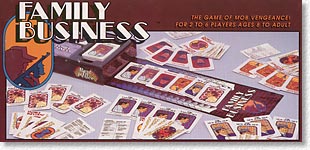
  1. Family Business

    Family Business - boxDer Hintergrund: die USA in den 20er und 30er Jahren
    während der Prohibition. Gangsterbanden bekämpfen sich gegenseitig durch Intriegen und
    Komplotte und versuchen, am Tag der Abrechnung, dem Mob War, möglichst viele gegnerische
    Mobsters liquidieren zu lassen

    Ein böses Spiel. Eines, bei dem ein Spieler nach dem anderen ausscheidet, bis nach dem
    letzten Massaker nur noch eine Familie übrig bleibt und sich der Sieger, stark
    angeschlagen, die Hände schütteln lassen darf. Böse auch deshalb, weil es wenige Spiele
    gibt, bei denen so konsequent von Allen gegen einen Spieler, sei es nun gerade der
    Schwächste oder der Stärkste vorgegangen wird. Hervorragend zum Abreagieren wenn die
    Gruppendynamik stimmt.

    Dank der einfachen Mechanik ist das Spiel schnell erklärt: jeder Spieler bekommt eine
    Bande (mob) aus neun Mitgliedern (mobsters) sowie vom gut gemischten Action Deck vier
    Aktionskarten verdeckt auf die Hand. Wer an der Reihe ist, zieht eine Karte vom Deck nach
    und spielt eine seiner nun fünf Handkarten aus.

    Das Action Deck enthält drei Arten von Karten: Angriffskarten, Rettungskarten und
    Gegenschlagkarten. Mit den Angriffskarten hat ein Spieler die Möglichkeit, einen
    gegnerischen Mobster auf die “Abschussliste” zu setzen (“Contracts”)
    oder einen Bandenkrieg zu starten. Mobsters auf der Abschussliste werden in einer Reihe
    offen ausgelegt und müssen dran glauben, sobald ein Bandenkrieg ausbricht, was spätestens
    dann geschieht, wenn die Liste 6 Mobsters enthält. Dann wird pro Spielerzug der vorderste
    Mobster in der Reihe liquidiert und ist sofort und endgültig aus dem Spiel. Noch
    schlimmer sieht es aus, wenn durch “Ambush” oder “Vendetta” ein
    Bandenkrieg ausgelöst wird und pro Zug gleich die ersten 2 Mobsters auf der Liste das
    Zeitliche segnen. Beim “St. Valentines Day Massacre” als schlimmster aller
    Fälle muss gleich die ganze Abschussliste dran glauben. Glücklicherweise gibt es da noch
    die Rettungskarten, die es einem Spieler ermöglichen, Mobsters wieder von der
    Abschussliste zu entfernen oder die Liste umzusortieren.

    Ein taktisches Element im Spiel sind die Gegenangriffskarten, die ausserhalb der
    Zugreihenfolge von jedem Spieler als Antwort auf eine gerade ausgespielte Karte eines
    Anderen gespielt werden dürfen. Gegenangriffskarten gibt es als Antwort auf Kontrakte,
    auf Rettungsversuche und zum Schutz gegen die Vendetta. Da die Runde beim Ausspieler der
    Gegenangriffskarte fortgesetzt wird, gibt es nicht nur die explizite positive Wirkung der
    Karte selber sondern auch die taktisch nicht unbedeutende Möglichkeit, Spieler zu
    überspringen und damit gegebenenfalls häufiger am Zug zu sein.

    Das Spiel verführt zu Gemeinschaftsangriffen gegen andere Spieler und ist alleine schon
    deshalb atmosphärisch recht stimmig. Die Tatsache, dass die Abschussliste durch Ablegen
    vor der Spielschachtel, die eine Mauer mit Einschusslöchern zeigt, stattfindet trägt dazu
    genauso bei wie die Nutzung des Schachteleinsatzes als kühles Grab mit R.I.P. Aufdruck.
    Was jedoch bei nur gelegendlichem Spiel stört sind die Bezeichnungen der Karten. Wer
    nicht gerade im Chicago der 20er Jahre groß geworden ist, kann mit Bezeichnungen wie
    “Take it on the lam” oder “Finger” nicht unmittelbar etwas anfangen.
    So mussten auch wir während der ersten Spielhälfte häufig in der Regel die jeweilige
    Bedeuting der Karten nachlesen, was sowohl den Spielfluss als auch die Spielstimmung
    störte. Eigentlich schade, da genügend Platz auf den Karten ist, um durch Piktogramme
    deren Bedeutung zu visualisieren – stattdessen finden sich dort nichtssagende Grafiken.

    Das Spiel lebt durch seine Gemeinheiten, das Bitten und Flehen der Spieler, doch nicht
    schon wieder dran glauben zu müssen und durch überraschende Mehrfachangriffe. Dass dazu
    die Spielgruppe passen muss damit eher Schadenfreude statt Frust aufkommt, versteht sich
    von selbst. Leider ist die Spieldauer je nach Spielerzahl mit 30 bis 60 Minuten recht
    lang und für die Frühausscheider bedeutet das langer Leerlauf.

    Bei uns war’s Peter’ Mob, der gleich als erster dran glauben musste, als sich
    Alle über seine Mobsters hermachten. Als bekanntermaßen aggressiver Spieler hatten wir
    damit unseren größten Feind schnell ausgeschaltet (ausserdem hatte er gerade
    verhindert, dass wir das von der Mehrheit gewünschte Globopolis spielten)
    . Da Walter
    und ich einen (stillschweigenden) Nichtangriffspakt hatten, zog sich das Spiel dann etwas
    in die Länge, wohl auch deshalb weil Hans sehr geschickt zum richtigen Zeitpunkt die
    richtige Karte spielte, um seine Mobsters wieder von der Abschussliste runter zu holen.
    Schlussendlich hatte er sich aber dann doch verausgabt und schied als zweiter aus, dicht
    gefolgt von mir. Das kurze Schlussgefecht zwischen Walter und Moritz quasi Mann gegen
    Mann konnte dann Moritz für sich entscheiden.

    Es zahlt sich sicherlich aus, bei “Family Business” ein low profile zu
    zeigen und möglichst wenig Angriffsfläche zu bieten. “Gemeines” Vorgehen wird
    schnell durch gezielte Angriffe mehrerer anderer Spieler “bestraft”, so dass es
    oft besser ist, im Windschatten zu fahren.

    Insgesamt hat das Spiel nicht schlecht gefallen, konnte dann aber doch nicht wirklich
    überzeugen.

    Westpark Gamers Bewertung: 5.0

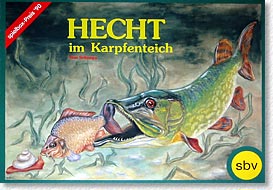
  2. Hecht im KarpfenteichHecht im Karpfenteich - box

    Another oldie on the table. “Hecht im Karpfenteich” (Pike In The Carp
    Pond
    ) was published 1990 by SBV, the publishers of the German games magazine “Spielbox“, after it won the Hippodice award.

    The game is all about sex in the city, well pond that is. The players’ target is to
    reproduce as many of their pikes as possible. The basic mechanics of the game are
    straight forward and simple:

    Pikes are able to reproduce in pike’s nests in the pond once two pikes are alone in any
    one of the three nests. The catch is that pikes will not reproduce if they are hungry.
    And that’s where the carps come in: pikes love carps – as food. So the first thing
    before sex in the pike’s nest may commence is for them to catch a carp (now how
    many perverts will find this page through their favorite search engine with this little
    piece of text in it?)
    .

    And here’s the next catch (pun intended): if there are less than 4 carps in
    the pond pikes are not allowed to eat them (the rule explaination for this is: because
    there are so few of them the pikes don’t find them). Which means: we need to get the
    carps to multiply. And that’s what the carp nests are good for, and – you guested it
    – hungry carps won’t reproduce. So there is another food supply in the game: snails,
    the carp’s favorite food if you believe the game designer. As soon as two well fed
    carps are in a nest they produce new carps, the amount of which is decided by the roll of
    a six-sided die.

    In each turn a player has the choice of one of six possible options plus 7 movement
    points which may be distributed amoungst the carps and one’s own pikes. Players may
    chose an option during their turn but that option then cannot be used again until all
    other options have been chosen before. The options are to either place a snail on the
    board, to trigger carp reproduction , to trigger pike reproduction (both of the latter
    two only have an effect if there are carps/pikes in the carp/pike nests that are ready to
    reproduce), to spend 7 extra movement points or to do nothing at all.
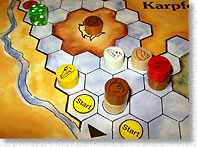
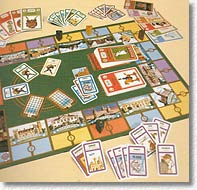
    Hecht im Karpfenteich - boardMoving carps is an action which not only helps
    oneself but also the other players as their is the common goal to have many fed carps and
    fill the carp nests for reproduction. Also the associated options of placing a snail on
    the board or to trigger the carp reproduction more often than not helps the other players
    just as much as the player performing the action. Often the worst thing of all is having
    to trigger a pike reproduction if only pikes of other players can reproduce.

    The correct timing of options is what makes the game rather complex. It is hard to tell
    what the other players will do and consequently, it is hard to really plan ahead.
    Therefore, one often finds oneself in positions that look hopeless with no carps near
    one’s own pikes and all pike nests in reach already occupied. This situation
    regularly occurs to some players in the first round and can be very demotivating to
    newcomers to this game. But I have yet to see a game of “Hecht im Karpfenteich”
    where this slightly disadvantageous position cannot be overcome until the game ends.

    This was also true in this game session when Hans had a very bad start but in the end was
    able to finish second just after Peter. Interestingly, Moritz and Hans do not like this
    game very much whereas Walter and myself find it rather tactical and like it because the
    theme of the game matches the atmosphere it creates quite well (or are we just two
    dirty old men?
    )

    Westpark-Gamers Score: 5.0

  3. Bluff

    Our usual closing game of a session whith nothing special to report this time.
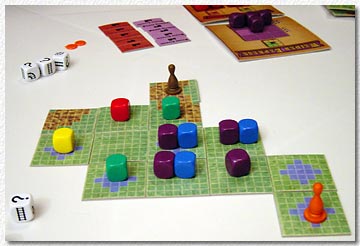
Railroad Dice

Railroad Dice

There are shares, there are tracks, but it is quite different of the game you possibly
think of now. In Rail Road Dice, you roll a number of dice when it’s your turn. Those
dice have straight tracks, curves, buy-a-share or question marks (which are wild) as
sides.

Even if you happen to roll six dice you can be unlucky enough to not roll a single
straight line. Or perhaps there are no options to buy stocks. In short: You cannot plan
your turn until the die is cast.

Railroad Dice boardYou don’t get anything at all for shares if
you do not have the majority. Therefore, if you do not have the majority, there is
no reason to be interested in that particular line. You can dispend of watching
another player playing it.

Poor Hans. He tried to be director of two lines. He lost both. It is okay that a game
does not reward failure. But it is not acceptable that Hans was confined to a mere
spectator role.

This sounds boring? Oh yes indeed, it is. Rail Road Dice is something of solo-player
game played with four players, and not a good one. Günther proposed that it might be
better with 2 players. I am not that sure. In any case, we stopped it after 2 hours.

Verdict: Poor game play. I am sure that no-one (except Günther) would be ready to give
it another try.

Westpark Gamers score: 2.75 (G: 4, L: 2, H: 2, P: 3)

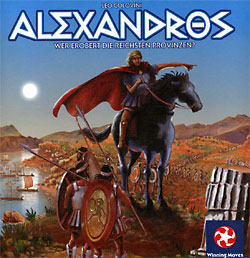
cover
Designer Leo Colovini
Publisher Winning
Moves
released 2003
Players 2 – 4
Playing time 45 mins.

Alexandros

This is quite an abstract game. In your turn, first you move Alexander the Great: You
gain a card if you move him with one of the two open cards. You lose a card if you move
him with one card of your hand.

Besides this stoic way of movement (let destiny have its will – if you rebel,
you’ll only pay with your cards), players dispute areas. Those areas give,
surprisingly enough, victory points. When it’s your turn, you have two actions. One
of them could be counting victory points.

Thus, most players avoid counting points except they are the top scorer. On the other
hand, the leading player will score every turn and accordingly lose one of his two
actions.

This is a nice game mechanism, or so it seems. But there is a problem: Imagine a coup
which would give you temporarily ascendance over an area. However, there is no point in
scoring since the top player would profit more than you do. The top player, on the other
hand, can do those coups with his first action and score with the second.

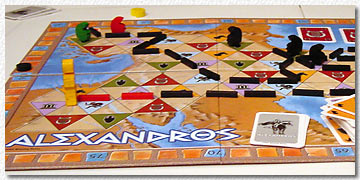
Alexandros board

In our game, I got an exceedingly large area by chance (well, it just had the right
cards in hand). I never lost it, and it gave me every round 15 v.p. (plus those I got for
lesser areas). One reason why no-one could dispute it was that there weren’t 11 cards
of each type as the rules state but 21 of one single type. Unfortunately, we did not
notice that during the game (but we did notice all those stupid blue warrior cards and
counted the pile afterwards). So I had my area and everyone else had lots of blue warrior
cards. The game was far from being thrilling, and my victory was undisputed.

We did like the mechanics, even if we are not totally convinced that they run smooth.
We’ll surely play it again, with 11 cards of each type. (If you happen to own the
game, please count your cards and post in our forum whether this was singular faulty game
or they sold lots of copies with too many blue cards).

Verdict: Intelligent mechanics. Not sure if they really work out. Need to play again.
Ratings are therefore tentative.

Westpark Gamers score: 5.75 (G: 6, L: 6, H: 5, P: 6)

Feurio! cover
Designer Heinrich Glumpler
Publisher Edition
Erlkönig
released 2003
Players 1 – 4
Playing time 30 mins.

Feurio!

This game does not only share the name of the best music CD burning software but even
the exclamation mark as part of the name. Let’s hope it’s okay with Jens Fangmeier.

Feurio! the game is a quick game with a huge luck element, so perfectly suited for
finishing the evening. However, I have got several objections: For the final scoring,
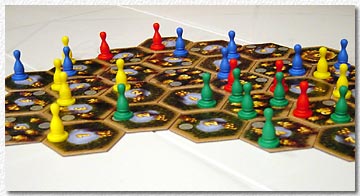
your v.p.s get divided by a divisor. Feurio! boardNow, from time to time, you can
get a very bad (I lost my 1 and suddenly had 6 – ouch!). This introduces lots of king
maker scenarios. At the same time, as soon as it is clear that you can’t get rid of
your bad divisor (as happened to Hans), this game is over for you. I did win, but only
because Loredana and Günther did not notice that I could get back my 1 divisor. If they
had noticed, they would have thwarted it but would have lost the chance to something good
for themselves – i.e., either of the others, Günther or Loredana, would possibly have
won.

Feurio! is a nice game, but I do not cherish those types of decisions and I shall
prefer others games to end an evening of board gaming.

Verdict: Nice quick game. Lots of luck involved but that’s okay because it is
short.

Westpark Gamers score: 6.0 (G: 7, H: 5, L: 7, P: 5)

Spielbericht 3.10.2002

Spielbericht 3.10.2002

Autor: Moritz

am Tisch: Hans, Peter, Andrea, Moritz

auf dem Tisch: Rise and Fall, Herr der Ringe: Die Gefährten, Star Wars: Epic
Duels

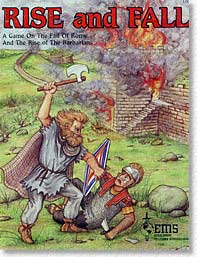
  1. Rise and FallRise and Fall

    Bei diesem Spiel gibt es eine merkwürdige Synchronizität: es gibt nämlich ein anderes
    Spiel, das diesem Spiel extrem ähnlich ist, aber einen anderen Designer hat:
    „Barbarian, Kingdom, Empire“. „Rise and Fall“ hat simplere
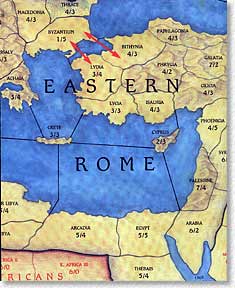
    Mechanismen, aber das selbe Spielprinzip: Auf einer typischen „Civilization“-Karte (ganz Europe, plus ein bißchen Asien und Afrika)
    entstehen und vergehen Reiche („Rise and Fall“). Je nach Szenario fangen die
    Spieler als Barbaren, Königreich oder Imperium an. Ziel ist es immer, das Einkommen der
    Felder in Siegespunkte zu verwandeln, je mehr Felder man besitzt, desto mehr Einkommen
    hat man. Am Ende eines Zuges verwandelt sich dieses Einkommen direkt in Siegespunkte.

    Die Barbaren haben zuerst einmal relativ schwache Truppen, dafür die Fähigkeit im
    Heimatland fast unbegrenzt Nachschub zu erzeugen (das Heimatland kann man sich beim
    Starten wählen– die Länder haben durchaus assymetrische Startbedingungen, daher
    kann man auch mal eine oder 2 Runden warten, bevor man ins Spiel einsteigt, um zu sehen,
    wo die Anderen anfangen) .

    Rise and FallNach mindestens 3 Runden Barbarentum kann man zum
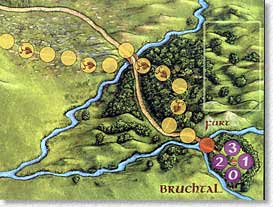
    „Königreich“ werden (oder es auch aufschieben, dann zwingt einen irgendwann
    ein Würfelwurf dazu): Die Truppen werden stärker, dafür kosten sie jetzt auch Unterhalt,
    man kann sich also effektiv weniger „Manpower“ als der Barbar leisten.
    Zusätzlich besitzt man nun eine Hauptstadt, die einerseits verteidigt werden muß,
    andererseits zusätzliches Einkommen bringt. Nach weiteren mindestens 11 Runden als
    Königreich, kann man zum Imperium werden: Man besitzt nun die stärksten Truppen, zahlt
    aber dafür am meisten. Außerdem hat man zunehmend mit Rebellionen im eigenen Land zu
    kämpfen. Irgendwann lohnt es sich nicht mehr, diese zu unterbinden, dann lässt man das
    Reich sterben und fängt mit einem neuen Barbarenstamm an. Die Siegespunkte werden einfach
    völkerübergreifend akkumuliert.

    Was ein bißchen wie „Vinci“ klingt, spielt sich leider nicht so, denn immerhin ist
    dies ein Wargame mit zahlreichen Countern, allerdings ein ziemlich simples.
    Nichtsdestotrotz werden viele Pöppel umhergeschoben und viele Kämpfe ausgewürfelt –
    allein deswegen sahen wir nicht das Entstehen eines Imperiums (nach 4 zügig gespielten
    Stunden stoppten wir in der 6. Spielrunde, gerade mal die 3. Königreichsrunde). Ein
    Sieger wäre wahrscheinlich schon in weiteren 4 Runden gekürt worden, sicherlich noch kein
    Imperium!).

    Um das Spiel in seiner ganzen Vielfalt zu erleben, sollte man also schon 12 Stunden
    einplanen, bei 6 Spielern noch wesentlich mehr. Ob man sich das antut, ist allerdings
    fraglich. Nichts an dem Spiel ist schlecht: Die Regeln sind einigermaßen übersichtlich
    und auch recht logisch, es gibt auch kaum Unklarheiten. Dennoch hat das Spiel einfach zu
    wenig Flair – es spielt sich einfach zu straight, und ist letztlich ein typisches
    Kingmakerspiel (wer angreift, oder angegriffen wird, verliert). Wo bei Vinci Vielfalt
    durch die ländereigenen Eigenschaften entsteht, beschränkt sie sich hier auf
    unterschiedlich starke Einheiten und Anführer (die zudem noch ein riesiges Glückselement
    einführen).Wir spielten schon mit den Optional Rules, dennoch war das Spiel einfach zu
    trocken, um Begeisterung hervorzurufen. Die eigentlich interessante Grundidee wurde
    inzwischen von anderen Spielen schon wesentlich interessanter umgesetzt. Und auch ein
    „Civilization“, das an Spiellänge gleichkommt, ist schlicht und einfach
    spannender.

    Daher eine ganz durchschnittliche Bewertung: 5.33

    Rise and Fall Spielhilfe

  2. Herr der Ringe: Die Gefaehrten

    Because we were all hot for a „Lord of the Rings“-Game but weren’t to
    keen for the rather abstract Knizia-Game
    we decided to pull-out the “other” film tie-in of Kosmos, the rather undernourished “Die Gefaehrten”. Herr der Ringe - Die Gefährten

    This game is a kind of pachisi played on a one-dimensional line and without the
    possibility to annoy other players – basically a racing game with slight elements of
    cooperation, and mainly decided by luck.

    Ok, it’s not a dysfunctional game, it will even mildly entertain, but basically it
    involves no skill or planning.

    Four Hobbits start from the Shire and try to reach Amon Hen (the end of the first film)
    in 4 etappes. The board is totally exaggerated: beautifully drawn it hides the fact that
    this game could probably be played on a board 1/4th the size, as this is really a racing
    game on a straight line.

    Die Gefährten - cardDie Gefährten - cardEvery turn each player rolls two dice: he can
    decide which on to use for combat, and which one for movement. Movement is (did I say it
    already?) in a straight line, you don’t count spaces occupied by others (which
    means the last quickly become the first, as they jump over spaces). After everybody has
    moved, the first player in the line (it’s a line, remember?) has to fight a card
    monster (using his combat roll as a basis, adding another die, the monster does the
    same). If he wins, he gets either victory points, a weapon, or movement chits (which can
    be used to enhance or reduce the movement die). If not, he moves back one position, and
    the next player has to fight. The monster usually becomes weaker with each combat.

    The first player to finish an etappe gets additional victory points, the latecomers
    increasingly less. After all players have reached Amon Hen the player with the most
    points wins.

    That’s really all – a children’s game really! Ok, there are some
    additional twists: there are event spaces where cards are drawn (yawn), and one player is
    always the ringbearer and can look at the topmost cards of the event and monster deck.
    There are also companions, which can be used in combat and then have to be given to
    another player. Also, if you find a weapon and already have one, you have to give the
    extra weapon to another player who hasn’t got one (cooperation – we are
    goodie-goodies here!).

    Nothing of this can hide the fact that this game is simply too light for the serious
    game connoisseur, and especially the serious Tolkien-fan.

    Ok, Knizia IS better. A lot!

    Westpark-Gamers: Score 3.33

  3. Star Wars: Epic Duels

    We are addicted to this game!

    This time Yoda and Obi-Wan faced Dooku and Darth. Both sides spent several turns
    “building up” cards, but Darth Vader managed to foil Yoda’s nearly
    perfect hand by playing his dreaded “special-card-destruction”-card. This
    meant Obi-Wan had to face the 2 major baddies alone, which was more than he could bear
    with his weak hand. Darth and Doofus, sorry, Dooku concentrated on the main characters
    early on with their attacks, which turned out to be a viable tactic when Obi-Wan bit the
    dust much too early.

    Yoda was stronger in the “force” (the cards), but simply could only prolong
    his death sentence when Dooku and Darth came in for the kill from 2 sides. Every turn
    they ended up having 2 more cards then he (drawing a total of 4 when he could only draw
    2). It was only a matter of time until Darth run him through with his laser sword.

    Westpark-Gamers score: 6.75

Spielbericht 2.10.2002

Spielbericht 2.10.2002

Autor: Aaron

am Tisch: Peter, Hans, Günther, Aaron

auf dem Tisch: Globopolis

  1. GlobopolisGlobopolis box

    Eine unserer eher seltenen “Vierer” Runden, die wir eher für Klassiker
    deutscher Spieleverlage reserviert haben. Heute stand aber das nagelneue
    “Globopolis” auf dem Tisch.

    Nach fast zweijähriger Entwicklungszeit auf Basis einer Idee von Charles Burnes hat Mike
    Lasher, besser bekannt als der Namensgeber von Mike’s Bike Tours, dieses Spiel im September im Eigenverlag
    heraus gebracht. Vertrieben wird das Spiel über das Globopoly Internet Cafe
    in München und einem “Grass Roots Marketing Plan” – bei einer geplanten 1.
    Auflage von 25.000 Spielen (so der Aufdruck auf der Schachtel) sicherlich kein Risiko
    freies Unterfangen.

    Der erste Eindruck beim Öffnen der Spielschachtel ist in Anbetracht der Veröffentlichung
    im Eigenverlag überwältigend: ein riesiger Spielplan, mehrere Kartensätze, jede Menge
    Würfel und noch mehr Lego ähnliche Bausteine füllen die Schachtel fast randvoll. Bis hin
    zum kleinsten Detail sind alle Spielkomponenten von hervorragender Qualität, die ein
    Ravensburger oder Kosmos Verlag nicht besser hätte hinbringen können. Die Spielregel sind
    in einem hervorragend aufgemachten 24-seitigen Regelbuch beschrieben, zusammen mit einer
    Beschreibung der Hintergrund-Story zu Globopolis – einer globalen Weltraumstadt, die nach
    einem verheerenden Meteoriteneinschlag im Jahr 2097 gebaut wurde. Die in dieser
    5-seitigen Story enthaltenen Zeichnungen lassen das ein oder andere SciFi-Fan Herz höher
    schlagen.

    Das Spiel ist ausgelegt für 2 bis 5 Spieler, die um die Macht in Globopolis kämpfen.
    Hierzu versuchen sie die Herrschaft über die Länder in Globopolis zu übernehmen und
    hierdurch sowohl Geld als auch Siegpunkte zu erlangen. Abhängig von der Spielerzahl endet
    das Spiel auf jeden Fall, wenn ein Spieler die festgelegte Punktzahl erreicht hat (eine
    begonnene Runde wird noch zu Ende gespielt).

    Globopolis ORSSDie Länder sind kreisförmig auf dem Spielplan in
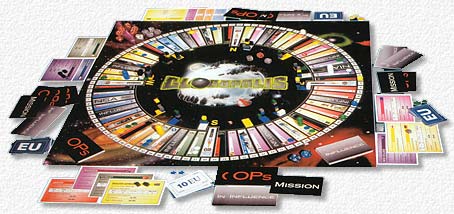
    vier Quadranten angeordnet. Jeder Spieler kontrolliert einen “Governor”
    seiner Farbe und bewegt ihn mittels eines Würfelwurfs über diesen Plan. Damit das
    Glückselement hier nicht zu groß wird hat ein Spieler die Wahl mit wie vielen
    Würfeln (eins bis drei) er seinen Bewegungswurf durchführt und ob er vorwärts oder
    rückwärts geht – letzteres kostet allerdings Geld.

    Jedes Land benötigt 5 verschiedene Ressourcen, um sich weiter entwickeln zu können. Neben
    Wasser, Nahrung, Energy und der Ultralight Component Fertigung gibt es als wichtigste
    Ressources die Network Security Einheit, die die Verteidigungs- und Angriffsstärke eines
    Landes entscheidend beeinflusst. Sobald ein Land einen kompletten Satz von 5 Ressourcen
    besitzt, kann der besitzende Spieler dieses Land entwickeln und damit seine Kampfstärke
    weiter verbessern. Gleichzeitig steigt auch der Wert des Landes, was durch zusätzlichen
    Punkterwerb dargestellt wird. Entwickelte Länder können zu “superentwickelten”
    Ländern gemacht werden, wenn das Land einen zweiten kompletten Ressourcensatz besitzt.
    Jedes Land gehört einer Farbgruppe an und der Besitz aller Länder einer Farbgruppe bringt
    zusätzliche Siegpunkte.

    Dies alles kostet Geld, das es zu verdienen gilt. Ähnlich des Monopoly-Konzepts muss ein
    fremder Spieler eine sogenannte “Conference Gebühr” bezahlen, wenn er auf einem
    Land in Fremdbesitz landet. Diese Gebühr richtet sich nach dem aktuellen
    Entwicklungsstand des betreffenden Landes – auch das erinnert wieder an Monopoly
    (Häuser/Hotels). Anders als dort hat ein Spieler aber immer die Möglichkeit, statt
    Gebühren zu bezahlen zu versuchen, ein fremdes Land zu übernehmen, falls er im gleichen
    Quadranten ein oder mehrere eigene Länder besitzt. Entscheidet sich der Spieler für diese
    Option beginnt eine Kampfrunde.

    Das Kampfsystem unterscheidet sich von Allem was wir bisher gesehen haben und macht das
    Spiel in dieser Phase auch für die Nicht-Kämpfenden interessant. Der angreifende Spieler
    entscheidet sich, welches seiner Länder im Quadranten die Übernahme versuchen soll. Jetzt
    wird abhängig von der Stärke der beiden betroffenen Länder die Anzahl Würfel, die jede
    Seite für die Kampfwürfe zur Verfügung hat ermittelt. Hierbei zählen einerseits der
    Entwicklungsstand der beiden Länder (das Land mit dem höheren Stand erhält einen 6-Seiter
    zusätzlich) und andererseits die Anzahl der National Security Units des Landes (jede
    bringt wiederum einen zusätzlichen 6-Seiter). Weiterhin entscheidet die Mehrheit der (als
    optional in der Spielregel gekennzeichneten) Network Infiltration Agenten über weitere
    ein oder zwei zusätzliche Würfel. Das alles führt dazu, dass der Angreifer mit mindestens
    einem 6-Seiter und einem 8-Seiter und der Verteidiger mit mindestens 2 6-Seitern und
    einem 10-Seiter kämpfen.

    Globopolis boardBei einem Kampf würfeln beide Kontrahenten gleichzeitig mit
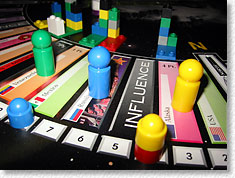
    ihren Würfeln. Zur Auswertung wird der durch den 8- bzw. 10-seitigen Basiswürfel
    geworfene Wert multipliziert mit der Anzahl von 6-Seitern, die den gleichen Wert
    zeigen (also: Pasch = Faktor 2, zwei Pasch = Faktor 4, Drilling = Faktor 3, usw.).
    Der Spieler mit dem niedrigeren Gesamtergebnis muss einen 6-Seiter abgeben. Sobald
    ein Spieler nur noch mit seinem 8- bzw. 10-Seiter würfelt und verliert ist der Kampf
    beendet. Der Gewinner eines Kampfes bekommt sofort das betroffene Land inkl. seines
    Punktwertes und seiner Ressourcen, das Land verliert dabei aber seinen
    Entwicklungsstand und alle National Security Einheiten und ist damit erst einmal
    ohne Verteidigung; dies kann aber sofort durch Verlagerung von Ressourcen von
    anderen Ländern ausgeglichen werden (so unsere leider falsche
    Regelinterpretation, da ja ansonsten ein Land für eine komplette Runde völlig
    ungeschützt ist und damit zur leichten Beute wird. Eine Diskussion mit dem Autor
    ergab, dass man das aber durchaus als Regelvariante zulassen kann)
    . Hat
    der Angreifer den Kampf gewonnen, kann er erneut sofort vom gleichen Territorium ein
    Land der gleichen Farbgruppe angreifen.

    Wir fanden die Kämpfe immer spannend und mehr als einmal hat der von der Würfelzahl
    unterlegene Spieler trotzdem den Kampf gewonnen. Dies liegt natürlich an der Art der
    Punktermittlung mittels Multiplikation statt der üblichen Addition, die auch in quasi
    aussichtslosen Situationen noch für einen Sieg sorgen kann (z.B. 2 gegen 7 Würfel mit 8
    (10-Seiter) mal 1 (kein Pasch) gegen 1 (8-Seiter) mal 6 (1 Vierling, 1 Pasch)). Wir
    hatten dabei nie das Gefühl, dass das System unausgewogen oder unkalkulierbar ist.

    Globopolis - boardEin weiteres Analogon zu Monopoly sind die 3 Typen von
    “Ereignis”-Karten: “Mission” Karten geben zusätzlich zur
    allgemeinen Siegbedingung über die Siegpunkte eine alternative Siegbedingung vor,
    die stark an Risiko erinnert. Anders als dort, kann man bis zu 3 dieser Karten
    besitzen und es reicht aus, eine der Siegbedingungen zu erfüllen.
    “Influence” Karten geben zusätzliche Fähigkeiten, die gerade in einem
    Kampf wertvoll sein können. “Opportunits” oder “OPs” Karten
    bieten zusätzliche Angriffsvarianten.

    Für den Erwerb dieser Karten sowie von Ressourcen und Agenten gibt es entsprechende
    Felder auf dem Plan, die erreicht werden müssen, was uns gerade bei den beiden
    Letztgenannten recht schwierig vorkam, da diese Felder nur wenige Male existieren. Geld
    gibt es – Monopoly lässt grüßen – beim Ziehen über Los, äh über “Teleport”.

    Ein weiteres interessantes Detail ist, dass ein Spieler zu fast jedem beliebigen
    Zeitpunkt Siegpunkte in Geld umtauschen kann – und umgekehrt. Das führte bei uns dazu,
    dass Günther seine letzten 20 zum Sieg benötigten Punkte kurzerhand mit Geld erwarb und
    das Spiel beendete. Hier müssen alle Spieler ein Auge auch auf die finanzielle Situation
    der Anderen haben. (Hier haben wir übrigens ein wichtiges Regeldetail übersehen:
    sobald ein Spieler nur noch 25 Punkte vom Sieg entfernt ist, darf er kein Geld mehr gegen
    Punkte tauschen, und asserdem nur maximal 5 Siegpunkte pro Runde)

    Unsere erste Runde Globopolis endete nach rund 3 Stunden mit dem beschriebenen Sieg von
    Günther. Bis zum 2. Drittel des Spiels war sozusagen der Sieg für alle von uns noch
    “drin”, obwohl Hans recht früh mit Geldmangel zu kämpfen hatte und die
    Entwicklung seiner Länder ins Stocken kam. Peter, der wie üblich aggressive
    Übernahmekämpfe veranstaltete konnte diese Situation anfangs ausnutzen und ein recht
    großes Länderkontingent kontrollieren, verlor dann aber bei wichtigen Kämpfen gegen
    Günther seine Länder wieder und belegte zum Schluss den letzten Platz.

    Ein Resumé nach einer Spielrunde zu ziehen ist uns nicht möglich – zu häufig erkannten
    wir erst spät die taktischen Möglichkeiten, geschweige waren wir in der Lage, eine
    Strategie zu entwickeln. Dazu ist das Spiel zu vielfältig und komplex. Auch die rein
    äußerlich hervorragende Spielregel entpuppte sich als Hemmnis, da nicht immer der
    betreffende Regelpassus schnell auffindbar war. Zwar sind alle Regeln auf nur 8 Seiten,
    davon alleine 4 für die erste Spielrunde, beschrieben aber der Regelaufbau ist gelinde
    gesagt “ungewöhnlich” und erschwert den Einstieg ins Spiel. Gemeinerweise
    finden sich wichtige Regeldetails nämlich als Randnoten oder optisch als Einschübe
    aufgemachte Zusätze, die schnell mal überlesen werden. Zwar gibt es zwei Quick Reference
    Charts, die allerdings nicht unbedingt übersichtlicher sind.

    Wir haben von einer Bewertung des Spiels nach nur einer Runde abgesehen, insbesondere
    nachdem die Meinungen doch recht stark divergierten. Peter hatte bereits nach 15 Minuten
    sein Urteil gefällt – ihm gefällt es nicht und das, obwohl er da noch gar nicht wusste,
    dass er verlieren wird. Bei Hans Günther und mir sind noch ein paar Spiele für ein Urteil
    notwendig.

    Link zu Globopolis
    Rules Clarificationspdf file

    Link zu Globopolis
    Variantenpdf file

    Because of the rather confusing and disorganised rule book I wrote an “Avalon
    Hill” style rules summary which should suit the “hard core” gamers better:

    Link zu Globopolis
    Rules Summarypdf file

Spielbericht 19.9.2002

Spielbericht 19.9.2002

Autor: Moritz

am Tisch: Peter, Hans, Aaron, Andrea, Moritz

auf dem Tisch: When Darkness Comes, Star Wars – Epic Duels, Wizard

  1. When Darkness Comes

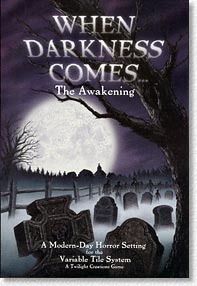
    When Darkness Comes - boxWieder mal ein „Orkabend“, mit
    zumindest 2 eindeutig dem phantastischen Bereich zuzuordnenden Spielen. Zuerst
    „quälte“ ich meine Spielerkollegen mit dem neuen „When Darkness
    Comes“ von Twilight
    Creations und Todd Breitenstein, zum ersten Mal in Erscheinung getreten mit dem
    relativ leichtgewichtigen „Zombies!“ (schönes Spielmaterial, aber spielerisch unbefriedigender
    Fast Food).

    „When Darkness Comes“ ist ein wesentlich ambitioniertes Unternehmen –
    bei vereinheitlichtem Regelwerk sollen mehrere Erweiterungssätze erscheinen, die es
    ermöglichen mehrere Szenarien aus dem Horror-Genre als Brett- wie auch als Rollenspiele
    zu ermöglichen.

    Wie auch in „Zombies!“ wird eine typische amerikanische Kleinstadt aus
    verschiedenen „Tiles“, diesmal grösser und detaillierter als in
    „Zombies!“, zusammengesetzt. Entweder die Spieler erforschen diese „on
    the go“, oder sie wird von vornherein aufgebaut, das ist von Szenario zu Szenario
    verschieden (und von diesen gibt es erfreulich viele als Beigabe der Basisausgabe, ein
    dickes Heftchen voll, gewürzt mit zwar nicht wahnsinnig originellen aber immerhin
    horrormäßigen Kurzgeschichten von „bekannten Horrorautoren“ – von
    keinem hatte ich jemals gehört – die die Geschichte des jeweiligen Szenarios
    einführen).

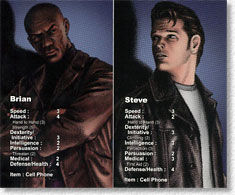
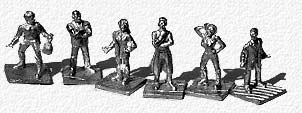
    When Darkness Comes - characters1When Darkness Comes - characters2Die Spieler verkörpern entweder 6 vorgegebene
    (und mit farbigen Karten sowie hübschen Zinnfiguren versehene) Charaktere, oder kreieren
    eigene nach einem einfachen aber interessanten Skillpoint-System (ein dicker Block
    Charakterblätter liegt dem Spiel bei, das in einer kleinen Schachtel ohnehin wirklich bis
    obenhin voll mit Spielmaterial gepackt ist, und das noch zu einem vertretbaren Preis. Die
    größten Gauner der Szene – Steve
    Jackson Games
    – könnten sich hiervon eine Scheibe abschneiden!).

    When Darkness Comes - boardJe nach Szenario werden die Tiles dann
    ausgelegt (eine recht grosse variable Spielfläche kann dadurch entstehen), und mit
    „disks“, kleinen Scheiben, die das Herz des Spiels bilden, belegt. Diese
    werden in den Gebäuden oder szenariospezifischen Punkten verdeckt platziert, und stellen
    Monster, mögliche Verbündete, Gegenstände und Sicherheitsleute dar – letztere
    nerven mit Abstand am meisten, denn Wachleute geben Minuspunkte, wenn sie gekillt werden,
    und das Ausweichen ist meistens schwieriger, als vor einem Monster wegzurennen). Die
    Strassen bleiben übrigens kurioserweise immer monsterfrei – es ist also genau
    anders als in den allseits bekannten Zombiefilmen, bei denen man sich meistens in Häusern
    verbarrikadiert, weil es auf den Strassen von Untoten nur so wimmelt!

    Die Spieler versuchen nun eine Aufgabe zu erfüllen, meistens geht es um Victory-Points,
    die man auf vielerlei Weise verdienen kann, durch Töten von Gegnern, durch Überwinden von
    Hindernissen, durch Heilen anderer Spieler, etc.). Für jede Aktion, sei es das Öffnen
    einer verschlossenen Tür, das Erforschen eines Hauses mittels „Perception“,
    oder den Angriff eines Gegnes, wird ein und das selbe originelle Würfelsystem benutzt:
    Man versucht ähnlich wie bei Poker, einen möglichst hohen Wert beim Würfeln zu erreichen.
    Unterster „Level“ ist mindestens eine 6, als nächstes kommt ein Paar, dann 3
    in einer Reihe (z.B. 4,5,6), usw. Je besser man in einer Fähigkeit ist, desto mehr Würfel
    kann man werfen. Helfen einem andere Charaktere, können eine bestimmte Anzahl von Würfeln
    wiedergewürfelt werden.

    Das System ist gewöhnungsbedürftig, funktioniert aber erstaunlich gut – es bildet
    eine ganz gute Kombination von Glück und ein bißchen Taktik, eine Art Mini-„Kniffel“ im Spiel.

    Dennoch ist natürlich der Glücksfaktor hoch – je nachdem welche „Disk“
    man entdeckt, schlittert man entweder in eine Katastrophe oder findet einen mächtigen
    Verbündeten. Man kann allerdings ein bißchen „Vorahnung“ betreiben, in dem
    man mit „Perception“ ein Gebäude durchsucht. Da aber bei einem
    fehlgeschlagenen Entdeckungsversuch (wenn man sich entschieden hat, auf einer Disk zu
    landen) alle Disks in einem Haus wieder durcheinander gemischt werden, ist dies nur von
    mäßigem Nutzen. When Darkness Comes - figuresAuch werden oft Anforderungen
    gestellt, die nicht zu erfüllen sind – so gelang es zum Beispiel Peters
    muskelbepackten, farbigen Charakter, nicht, eine in einer Polizeiwache (!) liegende
    Pistole zu finden: Er brauchte eine „Strasse“ von 3 Würfeln, hatte aber nur 2
    Würfel im Bereich Intelligenz. Selbst wenn ihm ein anderer Spieler geholfen hätte, wäre
    er „zu dumm“ zum Finden der Pistole gewesen (liegt hier ein unterschwelliger
    Rassismus vor???). Schlicht und einfach: er kann die Pistole NIE finden, andere müssen es
    für ihn tun. Aus ähnlichem Grund sind bestimmte Monster schlicht und einfach unbesiegbar
    (oder auch unausweichbar!).

    Unangenehm fiel auch der Bewegungswurf auf – jedesmal wenn gewürfelt wird, liegt
    ein roter Würfel bei, zeigt dieser eine 1, wird auf einer „Oh Crap!“-Tabelle
    gewürfelt, bei einer 6 auf einer „Wooohooo“-Tabelle. Die Auswirkungen dieser
    Tabelle sind zum Teil krass, so wird zum Beispiel bei einer „6“ auf 2 Würfeln
    bei „woohoo“ jedem anderen Spieler 1 VP weggenommen und dem Würfelnden
    gutgeschrieben, ohne daß dieser etwas besonderes leisten muß. Bei 6 Spielern besteht pro
    Runde immerhin eine 5/36 Chance, daß dies geschieht – und es gibt viele Runden! Bei
    einem Victory-Point-orientierten System ist das einfach zu extrem, wie auch bei
    „Zombies!“ ruiniert hier ein zu hoher Glücksfaktor ein ansonsten
    interessantes System.

    Generell machte das System in unserer Runde einen guten Eindruck, jedoch wurde die
    „Brettspielversion“ als zu langsam mit 6 Spielern empfunden, und letztlich
    auch als zu uninteressant. Wahnsinnig viele Möglichkeiten gibt es nämlich zur Entdeckung
    nicht, und schnell wiederholen sich Ereignisse und Vorgehensweisen (die
    „Security“ hat uns schon wieder aus dem Haus rausgeschmissen? Zum 3. Mal? Nun
    gut, wer macht die Tür auf, wer hilft mir dabei? Etc.).

    Dennoch bestand Interesse, mal die Rollenspielversion des Spiels (mit erweiterten
    Regeln, Weiterentwicklungsmöglichkeit der Charaktere, dem Spiel liegt eine hübsche
    Mini-Kampagne bei, die wohl in den nächsten Sets fortgeführt wird) auszuprobieren, da an
    der Spielidee doch irgendwas dran ist. Eine endgültige Bewertung des Spiels steht also
    wohl noch aus!

    When Darkness Comes Spielhilfe

  2. Star Wars –
    Epic Duels


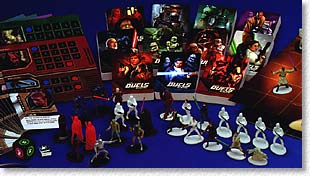
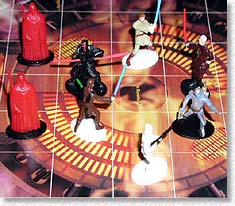
    Start Wars - Epic DuelsThis game has become a recent favourite of our group
    – although the luck factor is high, there is something about it that makes it
    immensely replayable, at least until one has tried all characters (and there are 12 of
    them, so there is a lot of material!).

    Again, we played a team game, with 6 players, 3 on each side. On the light side Yoda,
    Mace Windu (who on earth would like to be called “Mace”, seriously Mr.
    Lucas!) entered the fray, opposing the heinous Darth Vader, Jango Fett and Count Dooku.

    The light side started out very defensively – To use his biggest advantage, the
    power attack using the number of cards in hand as attack number, Mace usually has to wait
    out the first few rounds to collect cards. Also Yoda is a very defensive character, who
    normally has to bide his time. So we huddled together in a corner, using the mostly
    expendable clone troopers as a living shield. When Count Dooku and Darth Vader came close
    enough to attack they fell victim to Mace Windu’s whirlwind attack, which seriously
    diminished their survival chances. But Jango Fett was the first one to bite the dust
    – in multiplayer games of “Epic Duels” it is usually best to
    concentrate the attacks on one character so he will run out of cards, once this is known,
    he usually stands no chance. But after Jango’s demise Yoda was next to die, never
    really having a chance to use his powerful defense abilities. The light side countered
    this terrible blow with some power attacks on Darth Vader, who is usually very weak in
    defense. Darth Vader fell, but again it was possible for Count Dooku to eradicate Obi-Wan
    with one of his terrible “taunting” attacks (“Obi-Wan pees in his bed,
    heehee!” or something similar???). Now it was on Mace Windu alone to show the
    opponents what black power means – through careful card management he managed to
    build up his strength again, which was more then enough to kill Dooku, who had some bad
    luck in his card draw. But wait, there was still Jango’s assistant, the sniper with
    the weird long gun (who has some powerful cards). Again, Mace tried to bide his time and
    draw cards, while Mrs. Sniper evaded to the far side of the playing map in a desperate
    attempt to draw cards with her picture on it. When Mace felt confident enough to attack
    her (he had only one life point left, but good defense cards), she shot him on the way. 2
    cards were played, one with a 3 attack, and one with a 4 attack. Mace had a 4 defense and
    a 3 defense card. Guess in what order he played them….

    While the world grew black around the dying Mace, last hope of the light side of the
    force, he had at least the consoling thought that one game of “Epic duels”
    was so much more exciting than Episode I and II together. “I, as a boardgamer, can
    live with that, he thought. And then he fell….

  3. Wizard

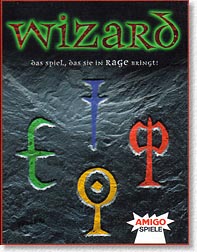
    Wizard - boxThis fun game shows that it sometimes only takes one simple rules
    twist to make a game interesting. In this case it is a kind of gauntlet that the players
    have to pass in this easy trick taking game.

    “Wizard” works, although the colourful fantasy-themed cards might make you
    think otherwise, like many other trick-taking games. There are 4 suits, each with 13
    cards (you could actually play the game with an ordinary card deck as well, with only
    slight rules changes), higher cards beats lower card, one suit is declared trump and
    beats all, first player to play defines the suit that others have to follow if they can.
    There are also 4 “wizard” cards which always win (if played first), and 4
    “fool” cards, which always lose. So far, so normal.

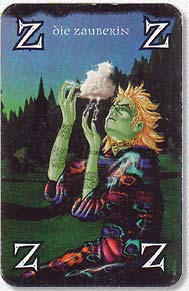
    Wizard - cardWhat makes the game a real winner is one simple idea (which is of
    course adapted from the ultimate trick-taking game, bridge): 1) you have to predict how
    many tricks you will make. 2) The first round you get one card each, the second round you
    get 2 cards, then 3, 4 etc., until in the final round ALL cards are distributed.

    If you meet your prediction, you get 20 points plus 10 points per trick taken, if you
    predict falsely, you get nothing.

    In the first rounds prediction is relatively easy – the more cards you get, the
    more difficult it becomes. All cards are “good”, even fools, because very
    often you find yourself desperately AVOIDING to get tricks, as you have already fulfilled
    your quota. Of course it is also very interesting to see what the other players predict
    – if everybody announces lots of tricks, you might rethink your hand that you
    initially thought to be good enough for a trick or two. It is also possible to play
    destructively, announcing more (or less) tricks than you plan to do, although this only
    works against somebody, not for yourself. The last round is especially exciting, as all
    cards are in play.

    This game won’t certainly win the design award for originality, but it really is a
    good and fun filler-in or closer for a games evening, and works equally well with any
    number of players from 3 to 6.

    Recommended, and you don’t even have to buy the game!

Spielbericht 11.9.2002

Spielbericht 11.9.2002

Autor: Aaron

am Tisch: Peter, Hans, Walter, Moritz, Basti, Aaron

auf dem Tisch: Star Wars – Epic Duels, Öl für uns alle, Der wahre Walter,
Nimm’s Leich!, Bluff

  1. Star Wars – Epic Duels

    Diesmal spielten wir Epic Duels zu sechst in der Variante “dunkle” gegen
    “gute” Macht, d.h. es spielten 3 (Walter, Basti, Hans) die gute Seite und 3
    (Peter, Moritz und ich) die dunkle Seite.

    Epic Duels - boardPeter begann das Spiel und hatte mit dem Imperator gleich gute

    Spezialkarten zur Verfügung, die er sofort gegen Walter einsetzte. Der verlor damit alle
    seine Handkarten und war schutzlos, ohne überhaupt am Zug gewesen zu sein. Als Peter dann
    in seinem zweiten Zug dies ausnutzte, um Walters ersten Charakter zu töten stand Walters
    Meinung über das Spiel fest: keine Möglichkeit, das Spiel zu beeinflussen – man wird
    gespielt. Hier spielte sicherlich eine Rolle, dass wir zu wenig als Team spielten, um uns
    gegenseitig zu schützen.

    Die übrigen Spieler lieferten sich einen spannenden Kampf, der letztendlich nach 30
    Minuten Gesamtspielzeit mit dem Sieg Peters und damit der dunklen Seite der Macht endete.

    Bis auf Walter waren alle der Meinung, dass “Epic Duels” ein spannendes,
    kurzweiliges und sehr stimmiges Spiel mit ausgewogenen Charakteren ist, das wir gerne
    wieder spielen werden.

    Westpark-Gamers-Bewertung: 7.75

  2. Öl für uns alle

    Öl für uns alle 1976In the 1960s I played this game quite often and I remember
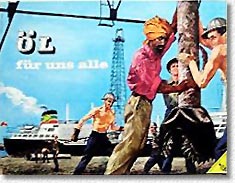
    that I liked it a lot at the time.
    Ravensburger
    published the first release in 1960 (apparently in co-operation with
    British Petrol) and decided to re-release it in 1976. The second issue came with large
    separate boards for the oil drilling and market value markers but overall I liked the
    1960 material better – it delivered a less abstract flair to the game (I particularly
    liked the little oil drilling towers, which although a bit fiddley to use were a lot
    nicer than the abstract plastic pawns used in the 1976 release). We played the 1976
    release of Hans, who has equally good memories about the game as I have.

    Basically, this a business game about oil exploration and transportation. Players roll a
    die to move their pawn across a track on the main board. The space they end their move on
    indicates an action they can or must make. Some spaces trigger actions just when moved
    over – these actions apply to all players. Possible actions of the first kind are buying
    the next available oil drilling right and to start drilling for oil, or to take one of
    the two kinds of event cards. A possible action of the second kind is that all oil wells
    belonging to players produce oil, which increases the level of oil in the storage tanks
    of each well.

    Öl für uns alle 1960Once a player has moved his/her pawn (s)he may charter a
    tanker to transport oil from a well’s storage tanks to a refinery. Two types of
    tankers with different capacity (and charter price) are available and no ship may be
    chartered if there is insufficient oil to completely fill it. Tankers move one space
    across the world map on the board per player’s turn. Shipping routes have different
    length depending on the location of the well and the chosen refinery. Whenever a ship
    moves the owner has to pay operating costs, which are on top of the initial charter cost
    for the tanker, making it important to always have sufficient money available – so
    players have to carefully watch their cash flow. Once a ship reaches its destination the
    refinery pays the current market price for that location and the price drops one step
    thereafter. This is a simple mechanism to simulate supply and demand.

    Players start with one working oil well and may start as many oil drilling operations as
    they like – provided they end their move on the appropriate space and have sufficient
    money to buy the exploration rights. Drilling for oil is a chancy business and will fail
    or incur additional costs in about 40% of the cases.

    The game ends once the first player has successfully completed 10 oil deliveries to the
    refineries.

    All the good memories about the game disappeared during playing for about 90 minutes
    after which we aborted the game. The conclusion was that it would last at least another
    90 minutes if not a lot longer. This in itself would not have been a problem if the game
    provided at least a minimum of player interaction. Instead, players have to wait
    endlessly for the other players to complete their moves without being able to plan ahead.
    Most of the time players would be able to plan and perform their moves completely
    independently of each other as hardly any of the player’s choices has an impact on
    the other players. Even the oil price changes due to supply and demand variations were
    found to be of little tactical implication as shipping routes are too long to be able to
    seriously plan ahead. So the game comes down to the simple principle: start an oil
    exploration whenever you can and ship oil whenever possible using the shortest possible
    route, and most importantly “beat” your opponents when rolling the die. Not
    enough substance for a game that lasts 3 hours or more…

    Westpark Gamers Score: 2.34

  3. Der wahre Walter

    Fata Morgana, the publisher of this game is best known in the English
    speaking parts of the world by their game Kreml, which was
    published in English with slightly modified rules by Avalon
    Hill
    under the name of “Kremlin“.
    Many Fata Morgana games are card games (like their famous “Anno
    Domini
    ” and “Tichu“) and “Der wahre Walter”, too, comes as a set of
    156 cards with 3 statements each on either side of the card. Each of the statements
    refers to the person reading it to the others (the Sphinx). A keyword of a statement is
    blanked out by the word “Walter”.

    The game works like this: in sequence each player for one turn resembles the
    “Sphinx”, takes the next card from the shuffled deck, selects one side of the
    card and reads the 3 statements to the other players. Example: “Having won a million
    in the lottery I would Walter.” Using their knowledge about the person
    playing the Sphinx the players (including the Sphinx) write down what they think is the
    most appropriate replacement for the word “Walter”. This can be a single word
    up to a complete sentence.

    Once all players have written down their “Walter” words the Sphinx collects all
    notes and reads them (including her own) in random order to the players. The players (of
    course excluding the Sphinx) then guess what the Sphinx’s “Walter” words
    might have been. Players who guessed correctly receive a point (the Sphinx also receives
    a point for each correct guess of another player). In case a player guessed wrong the
    player who wrote down this (incorrect) word receives a point.

    Basically the game implements the same principles as the lexicon game or the German
    Nobody
    is perfect
    “. The only difference is the more personal touch by having to guess
    what the Sphinx will write down. The Sphinx will try to write down something that is
    likely to be guessed by the others and the other players will try to write down words
    which sound convincing to all other players in order to trick them into selecting this
    word. So it is of some benefit to know the person that plays the Sphinx quite well.

    All of this is by no means a new idea or principle – it works fine all right but does not
    have a “lasting effect”.

    Westpark Gamers Score: 5.67

  4. Nimm’s Leich!

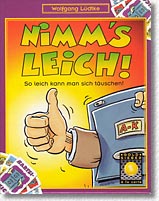
    Nimm's Leich!Although already 5 years old this is the first time we played
    the game. The title is a pun using the German idiom for “Take it easy” and by
    removing just one letter changing it to the equivalent of “Take a corpse” –
    well…

    The game uses 6 different “Leich” cards which are shuffled and placed face up
    in a line on the table. One end of the line is marked as “top” by turning the
    card (the highest ranking “Leich”) by 90 degrees. Each player receives 6 cards
    from a deck of 36. Each of these cards has 6 spaces for a representation of a
    “Leich” card. The distribution of “Leich” pictograms on these cards
    varies significantly, some show only 2 different “Leichs” but each of them 3
    times. Others show 3 “Leichs” each of them twice and so on. Each player takes
    the first card of his/her deck (which lies face down in front of the player) and the task
    of the players is to make a bet on how many “Leichs” of a particular kind are
    represented in total on all of the players drawn top cards. The start player makes the
    first bet. The next player now has three choices: either raising the bet for that
    “Leich” by at least one, or quoting a new bet for a higher-ranking
    “Leich” or challenging the bet of the previous player. If a bet is challenged
    all players vote on this bet by simultaneously showing a “thumbs up or
    down”. Those choosing “thumb up” believe in the bet, those with their
    thumb down disbelieve it. The cards are then revealed and the players who guessed
    correctly discard their card, the other players take back the card and place it as the
    last card in their deck.

    Twice in the game each player has the opportunity to ask two players to show him/her
    their card. This must happen before a bet is challenged, though.

    The game ends once a player has discarded all of his/her six cards.

    If all of this sounds familiar: yes, the principle is very similar to “Liar’s
    Dice” or “Bluff” as it is called in Germany. In comparison, we much prefer
    Bluff – it plays faster and is a bit more predictable with respect to the odds, and last
    but not least the suspense of the fact that the number of dice (and players!) is
    constantly reduced is unsurpassed.

    Westparkgamers Score: 4.5

  5. Hence we decided to play our favorite “last game of the
    evening”:
  6. Bluff

    After having some extreme results regarding the number of dice showing the same value
    last time round, this round was more of the usual matter. Our first round was slightly
    off the usual as it showed an surprisingly fast reduction of dice during the first few
    turns.

    Westparkgamers Score: 7.58

Spielbericht 5.9.2002

Spielbericht 5.9.2002

Autor: Moritz

am Tisch: Peter, Hans, Andrea, Moritz

auf dem Tisch: Legend of Zagor, Star Wars – Epic Duels

Der 2. „Orkabend“, diesmal wesentlich erfolgreicher als der erste (siehe
„Undead“-Kritik
), mit 2 schönen Spielen:

  1. Legend of Zagor (Kurzkritik)

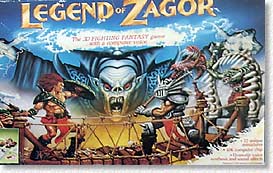
    Legend of Zagor - boxDieses Spiel aus den 80er Jahren ist in Deutschland kaum
    bekannt – Es basiert lose auf der berühmten Fighting Fantasy – Buchreihe (man
    denke an „Warlock of Firetop Mountain“), und wurde speziell für einen jungen
    Spielerkreis konzipiert (sprich: picklige 12-jährige). Daß man dieses Spiel auch als
    Erwachsener spielen kann, liegt nicht nur daran, daß wir im Herzen IMMER NOCH picklige
    12-jährige sind.

    Das Spielmaterial ist erst einmal umwerfend: Ein grosses Dungeon mit 3 Leveln wird
    aufwendig aus tollen und farbigen Plastikfiguren aufgebaut. Es gibt sogar eine richtige
    Hängebrücke, alles ist plastisch in 3D gestaltet, und gut konzipiert und durchdacht.
    Herzstück des Ganzen ist die Gruft von Zagor: Ein schwarzes, schweres Gebilde mit einem
    riesigen Knochenknopf obendrauf. Diese Gruft ist auch der „Kopf“ des Spieles:
    denn Zagor spricht!

    Legend of ZagorAm Anfang schaltet man das Spiel ein und eine dröhnende Computerstimme
    ertönt (übrigens ein echter Sprachchip, keine Samples): „Who dares challenge
    me?“. Die Spieler melden sich mit Knopfdruck auf einen jeweils ihnen zugeordneten
    Knopf an, dann geht’s los. Zagor bestimmt per Zufall wer anfängt.

    Es gibt 4 „Charakterklassen“: Wizard, Barbarian, Warrior, Dwarf. Diese haben
    nicht spezifisch andere Fähigkeiten, sondern benötigen unterschiedlich viel Geld für die
    sehr wichtigen Gegenstände, die man sich am Anfang und während des Spiels besorgen kann
    (es gibt sogar einen richtigen Händler mit eigener Plastikfigur, der die Waren im Dungeon
    an den Mann bringt! – das „Ding“ neben ihm ist übrigens eine Katze!).
    Dieses System resultiert in unterschiedlichen Schwerpunkten, die dann doch wieder
    charakterspezifisch sind, so zahlt der Barbar am wenigsten für Waffen, am meisten für
    Magie, etc.. Ein interessantes und dennoch simples System!

    Im Dungeon gibt es ausser den Monstern in den Haupträumen auch „Tiles“ zu
    entdecken, die nach Memory-Manier auch mehrmals verwendbar sind, d.h. man muß sich gut
    merken, was aufgedeckt wurde. Dies sind dungeontypische Gefahren und Hilfen: Gold,
    Fallen, Wachen, etc..

    Die Monster in den Haupträumen sind jedoch am Wichtigsten, denn nur dort gibt es die
    wertvollen Schatzkarten zu finden, mit denen man letztlich den bösen Zagor schwächen kann
    (man braucht möglichst viele davon).

    Der Kampf ist extrem kultig: je nach Level drückt man einen bestimmten Knopf, das
    allseits bekannte „Who dares challenge me?“ erklingt, dann drückt man den
    eigenen Knopf, und der Computer „würfelt“ ein Monster aus „SomeTHING
    approaches: you hear a NOISE behind you!“ (oder Varianten hiervon) . Dann sagt der
    Computer die Statistiken des Monsters an, und los geht’s. Den Rhythmus des Kampfes
    gibt der Computer vor: erst sagt er eine Zahl (nach der man bestimmen kann, ob das
    Monster trifft), dann würfelt der Spieler. Durch die ulkigen Soundeffekte kommt hier
    wirklich Stimmung auf, obwohl es hier wirklich simpel zugeht: entweder man trifft, oder
    man trifft nicht. Immerhin kann man Gefolgsleute für sich kämpfen lassen, magische Pfeile
    einsetzen, Zaubersprüche sprechen, etc.. Aber selten war es so still an unserem Tisch
    – fast kommt eine hypnotische Atmosphäre auf!

    Noch kultiger ist die Tatsache, daß der Computer das Spiel immer wieder mal vollkommen
    überraschend mit Zufallsereignissen unterbricht, die irgendeinen Spieler ausserhalb der
    Reihe betreffen. Das Unheimliche ist, daß das Spiel sich die Aktionen der Spieler zu
    merken scheint: so wurde ich gleich zu Anfang vom Computer als „Coward“
    beschimpft, der sich vor den Monstern versteckt (ich hatte tatsächlich weniger Kämpfe als
    die Anderen).

    Natürlich ist das alles viel mit Glückselementen versehen, man hat dennoch das Gefühl,
    einigermaßen über sein Schicksal zu bestimmen. Zusammen mit den Sounds, dem tollen
    Ambiente und einer gut gestimmten Abenteurergruppe, die sich darauf einlässt, kann dies
    wirklich ein sehr unterhaltsames Spiel sein.

    Entdeckt das Kind in Euch und besorgt Euch ZAGOR!

    WHO DARES CHALLENGE MEEEE?????

    Westpark-Gamers-Bewertung: 7.75

  2. Star Wars – Epic Duels (Kurzkritik)

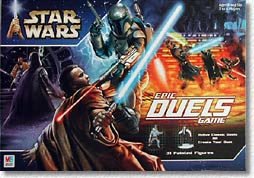
    Epic DuelsDieses Spiel ist momentan der letzte Schrei auf der immer besser
    werdenden „BoardgameGeek“ – Seite, was überrascht, denn es hat die 2
    Attribute, die normalerweise wenig Spielspaß versprechen: 1. Filmlizenz, 2. MB-Spiel!

    Hinter der poppigen Fassade versteckt sich jedoch ein geheimes „Avalon
    Hill/Hasbro“-Spiel (diese Lizenz ging ja jetzt an „Wizards of the
    Coast“ und versauert dort) – Aufwendiges Spielmaterial (in diesem Fall
    einigermaßen ansprechend bemalte Figuren aller wichtigen Star-Wars-Charaktere und viele,
    viele bunte Karten) verbunden mit einfachen Regeln, die jedoch auch Freak-Spieler
    ansprechen können – und ein guter Designer: Craig van
    Ness
    , machen „Epic Duels“ zu einem echten Knaller, nicht nur für Star
    Wars-Fans, aber natürlich besonders für diese.

    Die Idee ist simpel: Man nehme die Hauptcharaktere aus allen bisherigen Filmen, und
    lasse diese, auf der dunklen oder bösen Seite, in einer von 4 Arenen gegeneinander
    antreten, bis kein Pflänzchen mehr wächst. Jedem Hauptcharakter sind 1 oder 2
    Nebencharaktere zugeordnet (so umgibt sich Count Dooku mit 2 Robotern, Luke hat Leia
    dabei, etc.. „Was, Leia ist ein NEBENcharakter???“ sagt hier meine zornige
    Frau). Das Spiel ist als Teamspiel für entweder 4 oder 6 konzipiert (theoretisch könnte
    man wohl auch 8, 10 oder sogar 12 spielen lassen), funktioniert aber natürlich auch gut
    zu zweit.

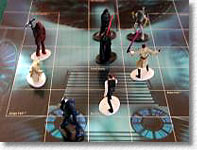
    Star WarsNachdem die Spieler sich für gleichviel gute wie böse Charaktere
    entschieden haben, wobei nichts dagegen spricht auch z.B. Gute gegen Gute antreten zu
    lassen, geht’s direkt zur Sache. Jedem Charakter ist ein eigener Kartenstapel
    zugeordnet, der aus Angriffs-und Verteidigungskarten besteht, sowie einigen aufgewerteten
    „Power-Angriff“-Karten und „Special“-Moves. Kein Stapel gleicht
    dem Anderen, und alle vorkommenden Eigenschaften sind filmspezifisch und schön umgesetzt.
    So ist Darth Vader vor allem offensiv ausgerichtet, hat aber eine schlechte Verteidigung,
    Yoda blockiert wie kein Anderer, Boba Fett schiesst Fangseile ab, etc.. Manche der Karten
    sind extrem stark, immer gibt es aber einen anderen Charakter, der speziell diese
    Fähigkeit unterwandern kann (so ist Lukes Fähigkeit der Offensivkartenschwächung eher
    schwach, aber besonders nützlich gegen Darth Vader, etc.). Man würfelt erst für die
    Bewegung (die simpel ist, aber sehr wichtig und sogar recht taktisch- die Arenen sind
    übrigens relativ klein), und hat dann 2 Aktionen: entweder a) eine Karte ziehen, b) mit
    einer Karte angreifen oder c) sich selbst mit einer Karte eines schon gestorbenen
    Nebencharakters heilen. Letztere Fähigkeit ist eigentlich nur eine „Last
    Resort“ wenn man nichts besseres zu tun hat.

    Karten sind immer Charakteren zugeordnet, d.h. man braucht eine
    Greedo-Verteidigungskarte, wenn Greedo angegriffen wird, etc. Karten haben Angriffs-und
    Verteidigungswerte, die Differenz wird als Schaden ausgeteilt (es wird also nicht
    gewürfelt). Wenn man keine passende Karte hat, ist man verteidigungslos, und der
    Angreifer macht automatisch Schaden. Die häufigste Aktion wird also Kartenziehen sein
    (maximal kann man 10 haben).

    Nebencharaktere sterben meistens schnell, und dann hockt man auf deren Karten (wie
    gesagt: Heilung ist selten gut).

    Natürlich gibt es einen Sieg erst, wenn entweder die Dunkle oder die Gute Seite der
    Macht vollkommen vernichtet ist!

    „Epic Duels“ spielt sich schnell, und entfaltet einen eigenen Reiz. Echte
    Star-Wars-Stimmung kommt auf, wenn Darth Vader Schrotteile prasseln lässt, und ein
    zorniger Wookie einen besonders heftigen Armbrustschuss loslässt, weil sein Freund Han
    Solo gerade das Zeitliche gesegnet hat (ja, auch hierfür gibt es Karten!). Das Spiel ist
    exakt so komplex, daß es sich flott spielen lässt (in ca. 1 Stunde), und man gleich Lust
    auf mehr hat (wir spielten es spontan gleich zweimal, was selten ist). Die vielen
    Kampfkombinationen der 12 Charaktere tuen ein übriges, um dieses Spiel wirklich jeder
    Spielergruppe empfehlen zu können, die Lust auf ein flottes und vor allem lustiges
    Duellspiel haben.

    Die Macht™ sei mit Euch!

    Westparkgamers-Bewertung: 7.75

Game Session Report 4.9.2002

Game Session Report 4.9.2002

Author: Moritz

at the table: Walter, Peter, Hans, Günther, Moritz

on the table: Sternenhimmel, Titan – the Arena, Forum Romanum, Adel
verpflichtet

This evening was full of German games, two of them with the „most german of all
german game inventions“ – the „Kramerleiste“ (“Forum
Romanum” and “Adel verpflichtet”), and two of them (“Forum
Romanum” and “Sternenhimmel”) with the “most german of all german
gaming principles”: scoring with the majority in areas!

  1. Sternenhimmel

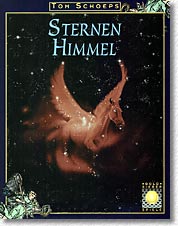
    SternenhimmelThis “majority in areas” scoring principle takes an

    almost freeform approach in this game, as circles of star signs are randomly placed until
    all have been scored (meaning: all players have placed a numbered token – or
    “star” – on each space of the star sign). As star signs go, some of them are
    longish affairs (like the “snake” or the “scorpion”), some of
    them consist only of four spaces (“libra”). The larger the sign, the more
    points it will bring upon it’s “completion” – the player who owns
    the majority gets the most points, but has to “pay” all other players who
    didn’t make 1st or 2nd place (one per placed token). This makes 2nd place the most
    interesting prospect, as it usually only gives 2 points less than the leader gets –
    without having to pay the others!

    Spaces on the signs come in two groups: “secret” (value of token is hidden)
    and “open”. Each player has a selection of tokens, mostly numbers (the
    highest being 10), two doublers (doubling the value of all surrounding tokens) and
    “black holes” (destroying all surrounding counters). The latter two are
    mostly placed on the secret spaces – If a player starts to surround a
    “secret” token with numbered tokens you can be pretty sure he has a doubler
    placed there. And other players can profit as well! The design of the starsigns makes for
    different tactical situations, “node” points become more important than
    “line” – points etc.

    SternenhimmelBut the problem is the “freeform” aspect – it
    can happen (it did happen to me) that you invest in star signs that will not be
    “cleared” by other players (usually it is desireable to place the LAST token
    on each sign, as this gives the most control of the scoring) – they simply place
    their tokens on other signs. This means your tokens are not freed for other uses – as
    long as the sign is not totally occupied the tokens remain on the board. If the group –
    and this is simple “peer pressure” – decides to let a player
    “hunger” on a sign, they can block him out for several rounds. Of course in
    our game this was partly my own fault, as I placed too powerful combinations (apparently)
    that didn’t make it attractive for other players to “invest”.

    The bigger problem though is the simple repetitiveness of it all: place a
    “secret” token – it is either a black hole or a doubler (mostly).or
    place an open number token. That’s all. With more convoluted star signs the outcome
    is totally random, as you can never really be sure who places what on the secret spaces.
    And then you feel slightly bored by the strange use of the “star” theme (and
    attractive playing materials) for a totally abstract game with little strategy.

    Not a winner….

    Westpark-Gamers score: 4.6

  2. Titan – the Arena

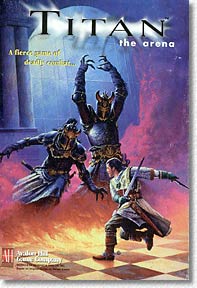
    Titan - The ArenaGünther kannte dieses Spiel noch nicht (obwohl er natürlich
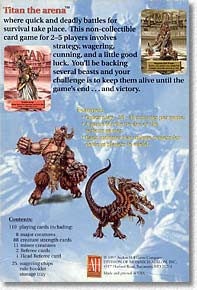
    die „Knizia-Urversion“ durchaus kannte). Immer wieder wird dieses Spiel gerne
    bei uns auf den Tisch gebracht – es ist perfekt in seiner Mischung aus Komplexität,
    Abwechslung und Spiellänge. 8 Monster kämpfen in einer imaginären Arena – die
    Spieler repräsentieren die Wettenden, die ihr Geld auf die Monster setzen. Es wird
    mehrere Runden geben, in der jeweils ein Monster ausscheidet. Am Spielende bleiben 3
    Monster übrig, und die überlebenden Wetteinsätze werden gezählt (Wetteinsätze auf
    sterbende Monster werden vernichtet). Jeder Wetteinsatz wird auf ein Monster in einer
    bestimmten Runde gesetzt (ein anderer Spieler kann dann nicht mehr setzen), und zählt
    mehr, je früher er eingesetzt wurde (natürlich ist die Chance, daß der Wetteinsatz
    überlebt, bei früherem Setzen geringer). Es ist auch möglich, in der ersten
    „Kampfrunde“, geheime Einsätze auf ein einziges Monster zu machen, die zählen
    am meisten am Ende. Man macht immer EINEN Wetteinsatz und spielt EINE Karte (nicht
    notwendigerweise auf das selbe Monster).

    Jedes Monster hat 11 zugeordnete Karten (von 0 – 10). Nur diese Karten können unter
    das Monster gelegt werden, es zählt immer die oberste Karte. Nachdem alle Monster in
    einer Runde eine Karte „besitzen“, wird das Monster mit der niedrigsten Karte
    entfernt. Natürlich ist das kein einfacher Prozess, denn die Spieler versuchen je nach
    Wettinteresse Monster zu stärken und zu schwächen. Es gibt auch einen Satz Jokerkarten,
    die auf jedes Monster gelegt werden können, und 2 Spezialkarten, mit denen man gespielte
    Karten regenerieren, und geheime Wetteinsätze entdecken kann.

    Titan - The ArenaDer eigentliche Gag des bisher recht abstrakten (Knizia!) Spiels
    ist aber eine Weiterentwicklung Don Greenwoods von Avalon Hill: Jedes Monster hat eine
    Spezialfähigkeit, die von einem Spieler ausgelöst werden kann, wenn er a) die meisten
    offenen Wetteinsätze auf dieses Monster hat, und b) eine Karte auf dieses Monster spielt.
    So ermöglicht die Hydra das Ausspielen einer weiteren Karte, der Troll kann gespielte
    Karten früherer Runden wieder auf die Hand nehmen, der Ranger zieht 3 Karten usw. Obwohl
    diese Fähigkeiten im Spiel seltener eingesetzt werden, als man auf den ersten Blick
    glaubt, so geben sie doch die entscheidende Würze, die dieses Spiel so unterhaltsam und
    spannend macht. Beim Platzieren der Wetteinsätze spielt natürlich die Zugreihenfolge eine
    grosse Rolle: Spiele ich gegen einen Spieler, der direkt nach mir dran ist, so wird er
    mir höchstwahrscheinlich die Tour vermasseln. Viel schöner ist es, den Abschluss einer
    Kampfrunde „vorzubereiten“ (man kann es ja wirklich selten alleine steuern),
    und erfolgreich darauf zu spekulieren, daß der linke Nebenspieler mit den selben
    Interessen auf jeden Fall „dicht macht“.

    Wir haben dieses Spiel sicherlich schon knapp 20 mal gespielt, und es verliert nie seinen
    Reiz, daher:

    Westpark Gamers Bewertung: 8.25

  3. Forum Romanum

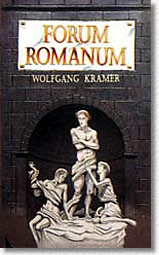
    Forum RomanumThis is again a typical German „majority in an area
    scoring” – game, with a geometrical twist. Forget the Roman Theme, this is a
    very abstract “Advanced TicTacToe” with no relation to history or senators,
    like “Republic of Rome”.

    Players have a set number of tokens which they can place anywhere on the board (after all
    tokens are placed, they can move any token to anywhere). The rectangle map is diveded
    into 7 “houses” (square areas), with an overlay of vertical and horizontal
    lines, and two diagonal lines. Each of these “areas” is scored, after all
    tokens in it have been placed. The winner is rewarded points, the others get nothing, the
    players who have NO token in the area are punished with negative scores (especially
    negative if they are the only one, who does not have a token). As the various areas
    overlap (for example you could place a token that fills up a house, but at the same time
    a vertical, a horizontal and even a diagonal line), you have to think ahead, and
    sometimes surprising scorings take place, especially in a 5 or 6 player game. After an
    area is scored it is marked with a token and cannot be scored again, but still a token
    placed there could be important for another scoring, so you have to think about what
    token to remove and when. Deadlocks are not scored, but at the end of the game (when all
    areas have been filled at some point) they are rewarded as if there were several winners
    in each area (mostly decisive in winning). So basically you place tokens, are surprised
    by sometimes unforeseen scorings, and attempt to have enough tokens in the final areas to
    get a good “deadlock scoring” – that’s all!

    The game keeps your interest because of the “gobang” element, but is not
    really very exciting. And Wolfgang Kramer went on to create much more interesting
    “majority scoring” games, like “El Grande”.

    Westpark-Gamers-Score: 5.4

  4. Adel verpflichtet

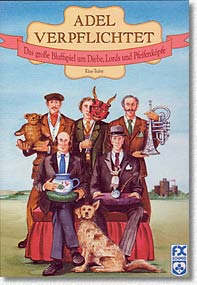
    Adel verpflichtetOne of the most famous “German
    Style”-games, and rightfully so, as it is still enjoyable and fresh more than a
    decade after it’s publishing.

    Players represent Art collectors who collect “series” of hopefully long
    (large) collections that they can exhibit. Cards are labeled A-F, and also have a date as
    a tiebreaker (oldest exhibits win, if two players tie in the size of exhibits).
    Exhibitions are a series of cards, and have to be played in an alphabetic series (so you
    could not play A-D-F, but for example A-A-B-C-D-F).

    There is a “race track” around the board, with an ingenious twist: Depending
    on the position of the leading player the scoring for the exhibitions is different. This
    encourages purposefully falling back for tactical reasons and using the new position of
    the leader to surpass him again. At the end of the game there is a final exhibition in
    which the largest and 2nd largest collection wins additional points on the track, mostly
    deciding the winner.

    Adel verpflichtetDoesn’t sound very interesting yet, but there is more:
    Each round each player secretly plays a card to show where he will go: either the
    “Auktionshaus” (auction house”, for acquiring art cards) or the
    “Schloss” (castle, for making an exhibit). The two places are dealt with
    seperately: in the auction house players try to play the highest “cheque” to
    acquire one of two open art cards, but halt!, you can also play a thief to steal the
    highest played cheque. Two or more thieves block each other out, and yes, the
    cheques/thieves are played face down, at the same time!

    The castle is more complicated, you can make an exhibit (the largest and the second
    largest are awarded spaces on the track), you can play a thief who can steal a picture
    from EACH exhibit, and you can play a detective, who only comes into action if there was
    a thief (the thief is taken temporarily out of the game) and gains you spaces on the
    track depending on your actual position (the farther you’re behind the more spaces
    you gain). If there was no thief: well, what a bummer!

    Again, this is a guessing game, as all players play their cards secretly.

    “Adel verpflichtet” really is a fun game, with elements of bluffing,
    prediction and possibilities for naughtiness. Generally it is adviseable to play
    “against the flow”:if you predict most people will make an exhibit it will be
    good to be the only one in the auction house (to get a very cheap art object). Also one
    can try to predict the cards played in the castle – players desperate for art
    objects are very likely to play a thief, as in the final analysis it is impossible to win
    the game without a good collection. If everybody predicts, something totally
    unpredictable can happen, like everybody playing detectives, which is of course good fun.

    A game to be recommended for anybody who is interested in “German style”
    games – you can tell it is good by the fact that it is popular in the UK and US,
    although the name of the game is totally unpronounceable for English speakers”!

    Westpark-Gamers-Score: 6.75

OHNE FURCHT UND ADEL (CITADELLES)

title

OHNE FURCHT UND ADEL (CITADELLES)

Publisher: Hans im Glück

Author: Bruno Faidutti

Tester: Aaron Haag

Game Tested: German 2000 edition, 1st rule release

Scenario: Set in a mediaeval surrounding each player aims to build the
strongest and most valuable city. A city is composed of districts of different attributes
and values. Assuming the role of one of seven possible characters in the game a player
performs the actions of that character to build and extend his or her city.

The Game: The game basically is a card game played using character cards and
district cards. At the start of the game each player receives four district cards from
the shuffled deck plus two gold coins (the coins are made of plastic, look nice and can
be stacked easily). The character cards are distributed amongst the players in a similar
fashion as in the game Verräter (which is actually referenced in the rules because of this): the
deck of character cards is shuffled, cards are discarded in order to leave just one more
character card in the deck than players in the game. The cards are then passed around for
each player to select a character, starting with the current king.

Following this, the “character action round” begins. There is a fixed
sequence in which the characters act: the assassin, the thief, the magician, the king,
the priest, the merchant, the architect and finally the mercenary. Each character has one
special ability which he can use in his turn in addition to the normal actions common to
all characters. The common actions are to either take a district card by selecting one of
two cards drawn from the face-down district deck or to take two gold. Then, if he wants
to, the player builds a new district in his town by playing one of the district cards
from his hand open in front of him and paying the amount of gold printed on this card.
Districts cost between one and six gold, the costs usually reflecting the value of the
district at the end of the game (there are actually two exceptions where a district at
the end of the game counts 2 more than the building costs).

The special abilities of the characters add tactical opportunities as well as
uncertainty to the game:

  1. Assassin: may announce that he kills another character. The player playing the
    assassinated character may not act at all during this round.
  2. Thief: may announce that he steals all gold from a character. The player
    playing that character hands all his gold to the thief at the beginning of his turn.
  3. Magician: may announce that he wants to exchange all his district cards with
    those of another player or any number of his cards with the deck.
  4. King: gets one gold for each yellow district in his town and he plays king in
    the next round, meaning that he is the first one to select a character.
  5. Priest: his districts are save from the actions of the mercenary and he gets
    one gold for every blue district in his town.
  6. Merchant: gets one extra gold plus one gold for each green district in his
    town.
  7. Architect: gets two extra district cards from the deck and may build three
    instead of just one district per turn.
  8. Mercenary: may destroy one district of another player paying the districts
    value minus one in gold to the bank (i.e. value 1 districts are free) and he get one gold
    for every red district in his town.

The final round of the game starts when one players has managed to have eight
districts in his town at the end of his turn. The game ends once all characters have
completed this round.

Playing Time: The rules are explained in less than 10 minutes, the game plays
in about 60 to 150 minutes depending on the number of players. A six player game usually
lasts 2 hours.

Similar Games: Verräter (Marcel-André Casasola-Merkle)

Westpark Gamers’ Opinion: The rules state that the game can be played by
three to seven players. Although there are sufficient cards in the game to actually do
this I believe the game suffers if played with more than five players. First of all the
playing time becomes way to long for a simple game like this – two to two and a half
hours – if played with six or more players. Secondly, with so many players nearly all of
the characters are in play most of the time. This leads to a situation where it is almost
inevitable that players try to hit the current leader and are able to do so. This makes
the game drag on for longer than it actually should. The final scores reflect this, too:
more often than not the scores are very close with the winner being the player who just
happened to get a lucky draw, scoring the four extra points for building eight districts
first.

With fewer players there is a lot more planning involved in order to get the timing
right for building that eighth district. Although the element of luck is somewhat higher
with respect to the availability of characters this actually improves the game. Now it
needs some thinking ahead to be able to get that architect character right at the moment
you need it to finish the game early. I believe that four or five players is what you
want to play this game with.

The character selection process is what makes the game so much fun. You can never be
absolutely sure which character has been selected by a particular other player, although
very often there seems to be an obvious choice for most players. But what if this obvious
choice is too obvious to the player concerned and he or she deliberately chose a
different one? Therefore you are faced with the problem of constantly thinking ahead of
your fellow players – who are exactly doing the same…

Aaron’s Rating: 8 (out of 10)

Westpark Gamers’ Rating: 7.5

Links to further information:

Luding Link for Ohne Furcht und Adel


Bruno Faidutti’s webpages about Ohne Furcht und Adel with a FAQ, the English
rules and some variants

Game Session Report 20.08.2002

Game Session Report 20.08.2002

Author: Peter

at the table: Aaron, Günter, Andrea, Moritz, Hans, Peter

on the table: Undead, Ohne Furcht und Adel, Hornochsen

  1. UndeadUndead

    Since Walter wasn’t available for this session, we thought this might be a
    wonderful opportunity for some dice-driven fantasy game. Crazed as we are for Nightmare
    House, Moritz did not meet with much trouble when he tried to convince us of Undead. The
    description of Undead is breathtaking: Based on Bram
    Stoker’s Dracula novel (indeed, meticulously following it), this game was said
    to combine elements of role-playing games (Moritz took the job as neutral dungeon master,
    Hans acted as vampire and the rest of us formed the hunter party) and board games (board,
    dice). Moritz told us a lot of blood transfers, battling vampires, Sherlock Holmes and
    everything else that makes a romantic’s heart beating faster and faster.

    However, the game play of Undead was painfully boring, at least for us hunters. We
    finished ten “days” (which equals two real hours). They nearly always had the
    same sequence. First, Moritz would secretly roll the dice and pronounce: “Nothing of
    interest in the newspaper”. Then, we would err on a map of London and keep searching
    (searching implied secret dicing by Moritz, so we never could be sure that we
    hadn’t simply overlooked something). Movement cost one hour, searching the same.
    Since a day had twelve playing hours (if I remember correctly) and we had to return home
    before nightfall (or search for a new home), we were able to check 4-5 boroughs a day. As
    you will instantly see, we hardly ever found anything. Thus, game play can be described
    more less with this structure:

    1. Hunters: “We advance versus west (etc.) and check for coffins – anything
      there?”
    2. Secret dicing, then “No”
    3. Advance time chit two hours, go back to step 1 if it is before dawn.

    Remember, we played ten days. In all this time, we found: a) a coffin, b) some destroyed
    coffins (we kept wondering about those secret allies – after the game, Moritz told
    us that this destruction was the consequence of a die roll which indicated “coffin
    vandalism” – imagine Walter’s reaction on this) and c) a female vampire
    (which we could instantly slay, without trouble but also without consequences) –
    however, this vampire affaire was one of two times that the newspaper had hints for us.

    The second time was “prowler seen at dead corpse”. We went there and kept
    desperately searching – to no avail. When Moritz felt our frustration, he
    adumbrated that we shouldn’t believe everything in newspapers…

    There were annoying game pauses for us when Moritz played through the night with Hans,
    and the same was true for Hans when it was our turn.

    Games can’t get much duller than this. After two hours, we finally stopped this. If
    you own a copy of this vain effort of game design, sell it on Ebay before others read
    this review. Granted, this may sound harsh and cynical, but this game really
    doesn’t deserve other. It is devoid of any virtues and deformed by dreadful design
    flaws.

    Peter’s score: 1 (the other hunters scored the game 1, 1, and 2, Moritz and Hans
    scored 5 each, so this game may be more interesting from the vampire’s and
    DM’s point of view)

    Westpark-Gamers score: 2.5 (Median 1.5, the lowest median of any game ever scored)

  2. Ohne Furcht und AdelOhne Furcht und
    Adel


    After the Undead trauma, we needed some good, ol’, German-style, down-to-earth game
    for our successful atonement. After some minor squabbling we agreed on “Ohne Furcht
    und Adel”. Refer to Aaron’s review of this game.

    I succeeded this time in winning (perhaps the first time ever, not sure about this) by
    following a low-profile approach. The results of this game are a further confirmation of
    Moritz’ theory that “Ohne Furcht und Adel” cannot be won if you ever
    happen to fall victim to the assassin. Moritz proposed a rule change: If you are the
    assassin’s victim, you won’t lose your turn, you just won’t be able to
    use your character’s special ability and you won’t get the extra money for
    matching buildings. This really might work out, because the assassin is still a powerful
    character: The thief can’t prey on you, and you’re the first to act (of
    tremendous importance in the final round if you can raise an 8th building).

    Westpark Gamers score: no new scoring.

  3. Hornochsen

    Hornochsen may be described as the intellectual version of “6 nimmt”. The main
    differences are that (1) the 5th card makes you take a row of cards, (2) a
    card lower than the lowest row of cards is added to the highest row of cards, (3) Players
    have special cards (+5, x2) they can add to a row of cards, (4) Players take turns (so no
    simultaneous playing!) and (5) they can play either 1, 2 or 3 cards.Hornochsen

    The resulting game play is very different from “6 nimmt”. The “6
    nimmt” strategy can basically described by the “höchste-niedrigste”
    (“highest-lowest card”) approach: The card you play must fit in a row and still
    not be the 6th one – this can rarely be guaranteed; therefore, your card
    must be lower then a card one of your opponents is likely to play (otherwise you’re
    the hapless fellow to take the row) but high enough to make someone else take the row. Or
    conversely, your card must be so high that someone else takes the row before you and you
    can start a new row. Hornochsen cards

    This strategy is voided in Hornochsen since there is no simultaneous play and you can
    play 1-3 cards. In Hornochsen, you need cards to complete rows on your own without
    external interference. If you were able to get a completely green row with your +5 and
    your x2, this should win the game. Alas, you can play only three cards at a time so the
    secret is careful preparation of your winning move. Try to prepare a row in a way that
    no-one can complete it except you, and then play your two special cards and the final,
    fifth card. Of course, this actually never works out… So you have to aim at less
    ambitious goals, trying to secure at least one 2x. Combined with some positive points,
    this should win the game.

    There is something we have noticed: Aaron was the first to quit the game, and he won. I
    was second to quit, and I was second. The same is true for Moritz who quit and ranked
    third. Only for Günter and Hans, this was the other way round. This basically means: The
    longer you stay in game, the more probable it gets that you will swallow all those nasty
    “Hornochsen” cards (negative points, that is).